
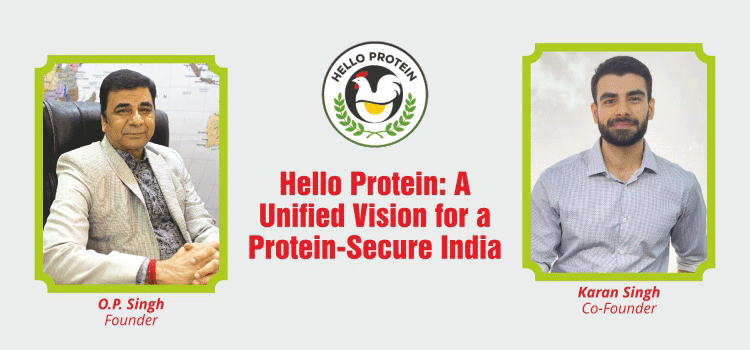
Poultry TRENDS Exclusive: In Conversation with the Founder Members of Hello Protein.
In this special interaction with Poultry TRENDS, Mr. O.P Singh and Mr. Karan Singh – the founder members of HELLO PROTEIN share the vision, purpose, and long-term objectives behind this nationwide public awareness initiative.
Conceptualized as a structured movement to strengthen protein literacy across India, Hello Protein aims to address the growing nutritional gap through credible information, industry collaboration, and responsible advocacy. The founders discuss the strategic roadmap of the initiative, the role of the Indian poultry sector in combating protein deficiency, and the importance of unified industry participation.
What is the long-term vision and purpose of launching the Hello Protein movement?
OP Singh & Karan Singh: Every human being in the next generation needs protein security ensuring not only improvement in their health parameters but also efficiency in their lives. Every Indian citizen deserves qualitative protein inputs in their daily diet. Protein deficiency doesn’t just harm individuals – it quietly drains corporate India. In a knowledge – driven economy where productivity depends on mental agility, nutrition is no trivial issue.
To bring this vision alive, we are spearheading a countrywide initiative called “HELLO PROTEIN”. The movement aims to spark conversations, debunk myths, and encourage Indians to consciously incorporate more protein into their daily diets. The initiative is designed to reach diverse segments from urban professionals and students to homemakers and fitness enthusiasts – by simplifying scientific information and converting it into practical, culturally relevant advice, supported by expert insights, public-awareness campaigns, and collaborations with nutritionists. Hello Protein strives to make protein education both accessible and engaging.
India is often described as facing a silent protein crisis. Why is this crisis not visible yet so serious?
OP Singh: Protein crisis in India is an untold story as yet. The protein deficit problem should be educated about properly in the ration because in a plate full of foods, a minimum of 1/4 th of the plate should contain a protein-rich food. We ourselves as an industry have decided to conduct an education program called “HELLO PROTEIN”.
India faces a silent protein crisis because 7 out of 10 citizens are protein-deficient, yet this malnutrition is hidden behind calorie-sufficient but nutrient-poor, carb-heavy diets. It is serious because it leads to long-term health issues, weak immunity, muscle loss, and chronic diseases, rather than immediate, visible starvation, often caused by low awareness and cultural eating habits.
Why the Crisis is Not Visible:
- The “Fullness” Illusion: Most Indian diets are high in carbohydrates (rice, wheat) but low in quality protein, meaning people feel full but are malnourished.
- Cultural & Genetic Factors: With roughly 39% of the population vegetarian and 81% avoiding certain meats or eggs, many rely on incomplete protein sources.
- Lack of Awareness: 93% of urban Indians do not know their daily protein needs, and many wrongly believe their cereal-heavy diet is sufficient.
- Affordability & Accessibility: While often a myth, protein-rich food can be expensive, leading low-income households to rely on cheaper calories.
Why the Crisis is Serious:
- Long-Term Health Consequences: Deficiency causes chronic issues like low immunity, poor muscle health, fatigue, and lower cognitive development in children.
- High Prevalence: Studies show 80% of Indian diets are protein-deficient.
- Impact on Productivity: Protein is essential for tissue repair and energy, affecting overall physical strength and economic productivity.
- Not Just for the Poor: The deficiency spans income levels, with many wealthier households also failing to meet recommended protein levels.
Are vegetarian diets in India sufficient in protein if planned correctly, or do they need diversification? What role can affordable protein sources like eggs & poultry play in national nutrition security?
OP Singh: Vegetarian diets in India can be sufficient in protein if planned correctly, but for many, they currently require greater diversification to meet daily requirements. While traditional combinations like dal-rice (pulses and cereals) provide complete protein profiles, widespread protein deficiency persists due to over-reliance on carbohydrates and a lack of variety in daily meals.
 Affordable animal-based sources like eggs and poultry are increasingly recognized as essential to closing this protein gap and ensuring national nutrition security. Despite the potential for adequacy, studies show that up to 84% of Indian vegetarian diets are protein-deficient. Eggs are among the most cost-effective sources of high-quality protein available in India. Animal protein in eggs and chicken contains all nine essential amino acids in the right proportions, making them superior to plant-based proteins for muscle building and repair. For millions, adding affordable and accessible sources like eggs and poultry is a necessary strategy for national nutrition security.
Let’s Junk Those Junk Food Ads – Recently Britain has implemented a statutory ban on advertising unhealthy food & the U.S. has also released a dietary guideline for Americans 2025-2030. What are your comments on this?
Karan Singh: Britain’s statutory ban on pre-9 pm and online ads for high-fat, salt, and sugar (HFSS) foods, combined with the U.S. Dietary Guidelines for 2025-2030 emphasizing reduced processed foods, represents a major, necessary shift toward proactive public health policy. These actions aim to curb obesity, particularly in children, by reducing marketing exposure and shifting food preferences.
It is a very good initiative & effort done by both countries; even in India, the Indian Council of Medical Research & Indian Institute of Nutrition should give some guidelines to the public so that the consumers will understand the addition of protein in their diet, because it will not only enrich the lifestyle & healthy situations but also encourage the newer generation to be more different than the current deficit protein nation.
Beyond policy, how important is nutrition education and awareness in correcting protein imbalance?
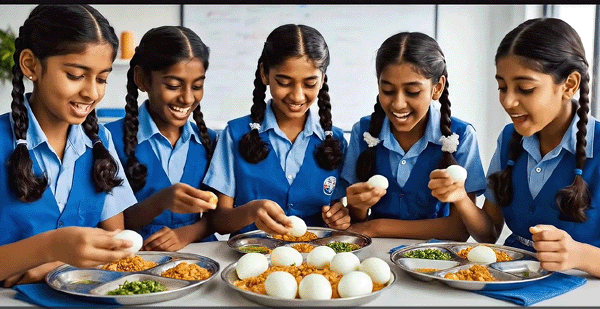 Karan Singh: Nutrition is a fundamental component of nursing education and is essential to providing high-quality care across the spectrum of healthcare. Positioning protein within a broader nutrition agenda is essential for improved health outcomes. While policy can improve accessibility to protein-rich foods (e.g., through fortification or school meals), education empowers individuals to choose, prepare, and consume these foods effectively.
In summary, while policies focus on increasing the supply of protein through Mid-Day Meals or Public Distribution Systems, nutrition education is essential to ensure that this protein is utilized by the intended population, correcting the “knowledge gap” that often drives protein deficiency.
If you had to give one message to Indian households about protein, what would it be?
OP Singh & Karan Singh: Treat protein as a daily essential, not occasional supplement. Indians are estimated to consume less protein than recommended. WHO recommends 1 gm of protein per Kg of your body weight should be consumed. Every unit of qualitative protein ensures a healthy life; therefore, every plate of food in the household deserves either egg or chicken based on its safety norms & nutrient quality. In a fast-paced urban world, protein is strength—and a well-nourished India is a stronger, sharper, and more productive India.
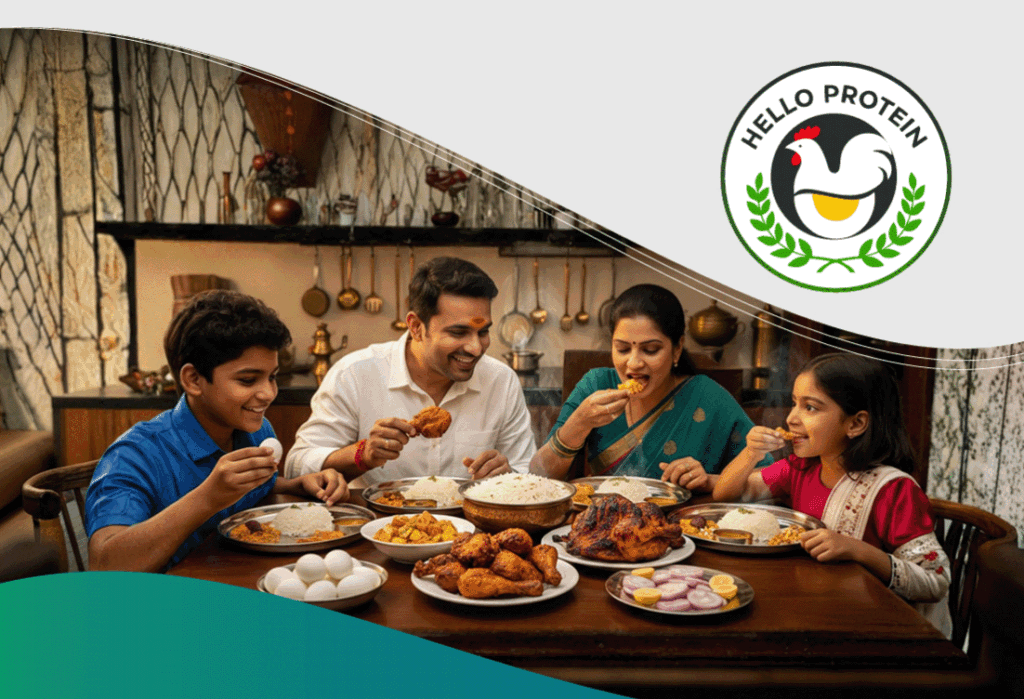 Strong families are built at the dining table, and a stronger India begins with adequate protein.
Let’s Join hands & make our nation protein deficit free with HELLO PROTEIN.
If this mission resonates with you, do drop your ideas/ comments/ suggestions at: helloproteins25@gmail.com