
The global poultry sector continues to show strong momentum, driven by rising demand, ongoing investment and solid economic performance in many markets worldwide. As producers expand and modernise their operations, they are also navigating important challenges, including disease risks, fluctuating feed and energy costs, and evolving welfare expectations.

EuroTier 2026, the world’s leading trade fair for livestock professionals, will showcase practical solutions that support the sector’s next stage of growth while helping producers address these challenges. Key trends include biosecurity, feeding efficiency, automation and improved housing systems, offering valuable insights for modern poultry operations around the world.

A global platform for poultry innovation

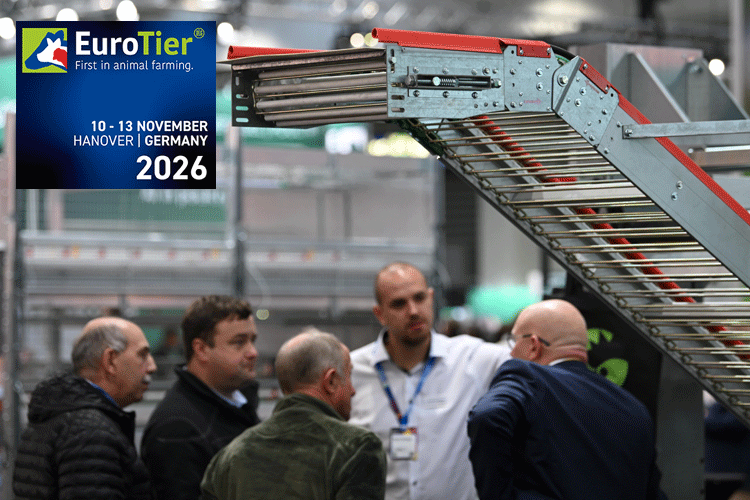
As poultry production continues to grow worldwide, the sector is benefiting from strong consumer demand, ongoing innovation and increasing efficiency across international markets. Against this dynamic backdrop, EuroTier 2026, taking place from 10 to 13 November in Hanover, Germany, provides a global platform where poultry technologies and production concepts from different regions can be compared and evaluated under practical conditions.

With more than 2,100 exhibitors across 13 halls, the indoor air-conditioned exhibition brings together the entire livestock value chain, including pig and cattle, and offers a comprehensive overview of current developments. Poultry is a central part of this, with a wide range of innovations in housing, feeding, automation and health management expected to be presented.

EuroTier also continues to attract strong international participation, including visitor groups from Asia such as Indonesia and Malaysia, underlining the growing importance of global exchange in livestock production.

Industry drivers shaping technology trends

Across global poultry production systems, several important factors are accelerating technological development. These include the need to further improve animal health and welfare, reduce antibiotic use and emissions, and manage feed and energy costs more efficiently. Feed efficiency remains especially important, as feed accounts for a major share of production costs, making feed optimisation a central priority for producers worldwide.

At the same time, disease risks such as avian influenza continue to influence production strategies in many regions. As a result, biosecurity, feeding efficiency and production management are becoming increasingly interconnected areas of innovation. These developments will also be highlighted at the upcoming International Poultry Conference on 9 November in Hanover, where experts will discuss major trends, innovation drivers and current challenges in the global poultry sector.

Animal health and biosecurity at the centre

Improving animal health remains one of the most important drivers of innovation in poultry production. Advances in vaccination, in particular, are helping to improve both disease control and animal handling. New systems allow vaccines to be applied more precisely and efficiently, contributing to better health outcomes and supporting longer production cycles. This is becoming increasingly relevant, for example, as laying hens are kept for extended periods in order to improve overall efficiency.

One examplEuroTier 2026e of this trend is the Vaccybot from Agri Advanced Technologies, a fully automated poultry vaccination system that combines advanced camera technology with robotic precision to administer multiple vaccines accurately. This can help improve vaccination quality while reducing stress for the animals and labour requirements on the farm.
Another important technology trend is the growing use of digital flock monitoring for the early detection of health issues and behavioural abnormalities. Combining sensor technology, data analytics and computer vision, these systems can continuously track parameters such as activity levels, feed and water intake, movement patterns and barn conditions. This helps identify deviations from normal flock behaviour at an early stage, enabling faster responses and supporting animal health, biosecurity and overall production management.

Hygiene also plays a central role, particularly in hatcheries. Innovations in egg disinfection, including advanced sterilisation technologies, are helping to improve chick health while reducing the need for chemical disinfectants.

Automation, labour and feeding innovation

Automation is becoming a core component of modern poultry production, helping to improve consistency, reduce labour requirements and increase overall efficiency. In housing systems, automated solutions are supporting daily management tasks such as cleaning, monitoring and environmental control, while advanced robotic systems can help maintain hygiene standards even in complex aviary structures.

At the same time, feeding systems are becoming more precise and increasingly data-driven. Solutions that use real-time data to support more targeted feeding strategies are gaining attention, helping producers to align feed delivery more closely with animal needs, flock performance and changing production conditions. New concepts also seek to combine efficiency with animal-oriented management, for example through systems that provide protein-rich live larvae and encourage natural behaviour.

Beyond the barn, automation is also advancing in slaughter and processing, where robotics and digital control systems are helping to improve workflow efficiency, consistency and labour utilisation. Taken together, these developments show how automation is becoming increasingly integrated across the poultry value chain, from on-farm management to downstream processing.

Evolving housing systems and animal welfare

Animal welfare continues to shape the development of poultry housing systems. One important trend is the move towards longer production cycles, supported by improved health management and breeding strategies. There is also growing interest in systems that allow birds to be kept with intact beaks while maintaining high welfare standards.

At the same time, innovative housing systems are being developed to reduce stress and improve overall system efficiency. Integrated concepts, in which birds remain in a single system from hatching throughout the production period, are gaining attention. These systems reduce the need for transport and adaptation, helping to lower stress levels and support better animal welfare. In addition, smaller design improvements, such as ergonomically optimised perches, show how even incremental innovations can contribute to both animal welfare and production performance.

A broader structural trend, particularly relevant in international markets, is the gradual shift from cage-based systems to free-range and alternative housing systems, reflecting evolving regulatory frameworks and changing market expectations.

Sustainability and efficiency

Sustainability is becoming an increasingly important factor in poultry production, bringing together economic and environmental considerations. Producers are working to reduce emissions, optimise resource use and manage energy consumption more efficiently. Feed efficiency plays a major role in this context. Improving feed conversion, along with the exploration of alternative feed components, are among the key strategies for reducing both costs and environmental impact.

As feed resources become more constrained globally, technologies that improve feed utilisation are gaining further importance. At the same time, many innovations are aimed at improving overall system efficiency, integrating production processes and reducing reliance on external inputs such as antibiotics or chemical treatments.

Water management and climate resilience are also moving further up the agenda in poultry production. In many regions, producers are increasingly focusing on technologies and management strategies that help improve water efficiency, safeguard water quality and strengthen resilience to more frequent heat periods. In particular, heat stress is becoming a growing concern, as it can affect animal welfare, feed intake, productivity and overall flock performance. As a result, ventilation, cooling, sensor-based climate control and adapted housing concepts are gaining importance as part of integrated approaches to more resilient and resource-efficient poultry production.

From trend to practical application

A defining feature of EuroTier is its focus on practical, farm-ready solutions. The technologies presented are not theoretical concepts, but advanced innovations that are already available on the market or are expected to be launched shortly.

For poultry professionals, this provides an opportunity to assess how new technologies can be integrated into their own operations. The exhibition enables direct comparison of different approaches, helping decision-makers identify solutions best suited to their specific production conditions.

For international visitors, EuroTier offers clear added value as a platform where technologies from different regions can be evaluated in a practical context.

Outlook

The future development of poultry production will continue to be shaped by resilience, biosecurity, efficiency and sustainability. At the same time, the sector’s growth momentum is expected to remain strong, supported by rising global demand and continued innovation. The trends observed in recent years, particularly in animal health, feeding systems, automation and housing, are therefore likely to remain central to the sector’s development.

EuroTier 2026 will provide a comprehensive overview of these developments and offer insights into how the poultry industry can turn growth opportunities into practical progress.

Readers of Poultry TRENDS are warmly invited to visit EuroTier 2026. For further information on visiting the exhibition or joining international visitor programmes, please contact Angelina Laas (DLG) at a.laas@dlg.org or visit www.eurotier.com.
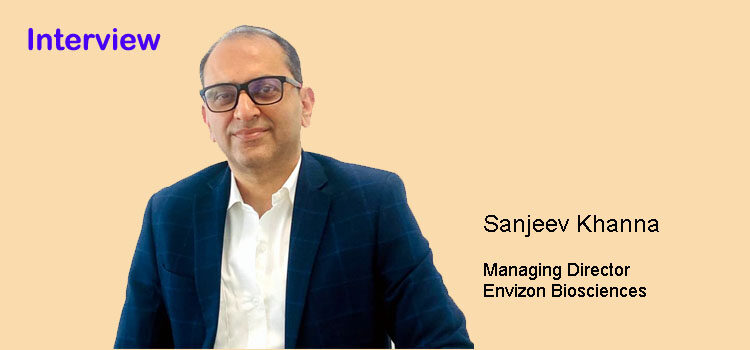
 

In an exclusive interview to Poultry TRENDS magazine, Mr. Sanjeev Khanna talks about the current biosecurity & hygiene challenges in poultry industry and his startup – Envizon Biosciences.

Mr. Sanjeev Khanna is an Entrepreneur, Leader & strategist. He has completed his UG from BHU & PG in Business Management from BYB, Mumbai. He has over 25 years of working experience with renowned MNCs like Ranbaxy, Elanco & Novus in various leadership positions with different job responsibilities & geographies. He was instrumental in establishing some of the great companies & brands in Indian subcontinent and spent most of his career span in business development in Livestock and Poultry segment. When he started his journey in Chandigarh, little did he know that this journey will be so exciting and rewarding.

Currently he is working as Managing Director, Envizon Biosciences, a startup based out in Bengaluru and focused on biosecurity & hygiene program in Indian subcontinent. He is adventurous & an explorer who loves traveling, hiking, camping to offbeat places, he is also a health freak & believes that Living a healthy life would extend longevity and regenerate the body and mind.

Excerpts of the interview:

How you describe yourself?

Team player, strategic thinker, grounded & believes in fundamentals to run the businesses & relations. As a professional I got opportunities to explore different geographies and to lead some of the great teams across sub-continent. Working with people with different mindsets and motivations was always exciting and thought provoking. Influencing teams & individuals to explore their true potential and helping them to become successful is always interesting and exciting for me. My strengths lies in people, team building & business development. I always believe that leadership is not a position or title it is an action & example We make leadership decisions every minute of every day, both at work and in our personal lives. When we speak up for what is right, either at work or in our home lives, we are demonstrating leadership.

How did you come with the idea of entering this field?

After working in different segments including Livestock & Poultry for so many years, I finally decided to take different course and started my own venture in mid 2021. I was looking for the key challenges our Industry is undergoing. What are the challenges faced by the producers and how we should provide them science based & trustworthy solutions.

I would like to quote Albert Einstein “ Relativity applies to physics, not ethics”. As in ethics either you are 100% ethical/honest or you are 0% & you cannot be in between place, same theory applies in Biosecurity, either it is 100% or 0% & there is no space in between.

After lot of research and brainstorming, we found that Biosecurity & Hygiene was one of the most over stretched words across the Industry in whole South Asian region, In spite of so many players and almost everyone talking about Biosecurity, still there are huge challenges of disease outbreaks which ultimately shrink the profitability of producers. There is no proven method to validate the claims made by different solution providers either. For example, a product selling at X price & another at 10X have almost same label claims and the producers are in a fix as to what to use and what are the value offered to them. In Envizon Biosciences we invested in machines and equipment to validate the claims to show the value of the solutions with ROI.

What is Envizon Biosciences? Where is it based at?

Envizon Biosciences is a startup company based out in Bengaluru and focused on science, technology & innovation. Our core is new conceptual products which can add value to the customers business. In 2021 Envizon Biosciences entered into an agreement with Intracare NL, a globally renowned company for biosecurity and hygiene products, for marketing of its solution in India. The combination of these leading businesses will offer greater sustainability and broader scope than either alone. In addition to Intracare’s track record of creating successful collaborations, Envizon looks forward to unlocking the shared potential of its combined business strengths with Intracare. By combining Intracare’s state-of-the-art R&D technologies & future proof solutions with Envizon’s diverse distribution network & able workforce, the joint venture will be a category leader in Biosecurity and Hygiene products. Beside that Envizon Biosciences is also working closely with other strategic business partners across the globe to bring latest technologies with good ROI to Indian producers.

What are the specific challenges or obstacles commonly faced when trying to maintain high levels of hygiene by farmers ?

As mentioned above, the biggest challenge we found is lack of right information and validation points. Also, during our research, we didn’t find right equipment and machines which is required to complete the job properly and professionally with many producers. Even with a good product available in the market, if application is not proper, it cannot produce the desired results. The staff who is applying the biosecurity products needs proper and regular training, scientific information & latest updates to use the solutions correctly. Currently many products sold in the market based on relationship & perception, instead of actual scientific data and information.

What is Intra-Hygiene concept?

As you must aware of, in the intensive livestock farming, we are constantly challenged by the threat of pathogens. If pathogens succeed to enter the farm, we are facing production and economical losses, decreased animal welfare, increased mortality, which ultimately leads to higher antibiotic usages & increase the cost. The only way to prevent entry of diseases into the farm is with optimal biosecurity. To mitigate these challenge and help producers to have ultimate biosecurity, Envizon Biosciences for the first time in India, launched a novel concept of Intra Hygiene program for Sheds, Hatcheries and Processing plants with help of latest science-based technologies.

These technologies have been launched first time in India and has two parts – one is the effective solutions, and another is its effective applications with help of the latest machines (mainly imported from Europe) and they play an important role to give full-proof results. All the program is having different validation points to share the results & ROI.

How is Intra-Hygiene different from existing products available in the market?

The current solutions available in Indian market and used by producers are of industrial grade which has been used mostly in the different industries and then started using in the poultry & livestock Industry as well. They are corrosive, not recommended in Livestock Industry and having lot of adverse effects directly or indirectly on the humans & animals, be it in livestock or poultry. All the Intra hygiene solutions used by Envizon biosciences are of food grade & European Union certified, They all are approved by top rated credentials authorities like ECHA, NSF etc. and all the solutions are highly effective with no adverse impact on livestock, machines & equipment.

How do you test the challenge level in a given poultry farm?

As I mentioned, Biosecurity is one of the most overused word across livestock & poultry Industry. People know of it in literal terms only. Washing the farms, spraying disinfectants is not completing the biosecurity cycle and that is the reason we see lot of incidences of disease outbreaks periodically. Then, the biggest challenge in our markets are validation of results.

Envizon Biosciences have a dedicated and certified team for Intra hygiene services. The team is equipped with all the latest scientific equipment to establish the difference and to validate the results before and after the services.

Explain the various stages involved in the process

There are 7 stages involved here in the process to complete the program successfully. Unless we clean the organic materials from the farm, cages, and other specific places, we can not eradicate micro-organisms from the farm. Therefore, we go with different stages including dry cleaning, wet cleaning, foam cleaning, disinfection, and validations at pre & post stages.

Are your products internationally certified? Which other countries is this product being used?

Yes, all the products are internationally certified by international credit rating companies like ECHA, NSF etc under PT01, PT02, PT03, PT04 & PT05. All the products are registered & use in all European, US & Asian countries with extremely satisfied customers. The products are completely safe for the poultry birds, on people who are handling it and on all the expensive machines used in our Industry.

What are the different areas within poultry chain where Intra-Hygiene concept can be applied?

The products can be applied in different poultry chain including Broiler, Layer, Hatcheries, setters & processing units in different dosages. There is no adverse impact of the products as all the products are human grade and safe to use in even food, chicken processing units and even in human hospitals.

What sort of equipment is used for carrying out the task? Do you have a professional team to carry out this task?

Yes, Envizon Biosciences invested in the equipment for proper applications of solutions and we have latest equipment & certified professionals across to do the job successfully.

How has been the market feedback so far? Any big names to share?

We are working on many exciting projects across India and South Asia region. Due to professional ethics & confidentiality agreements, it would not appropriate to share names.

Future depends upon the actions we take today. I do see lot of changes in the producer’s thinking process due to changes in consumer’s behaviour and demand.

India is one of the fastest growing economies in the world & home of 1.4 billion people. With so much development, fast urbanization & youth population, the demand of protein is going to be even higher in coming time. India’s 1Bn young population are well informed, well-travelled and know exactly what they need. With international exposures and social media influences, consumers are now aware and looking for food safety & hygiene while making their choices. This is going to drive our industry and will change the whole scenario and the way it works; the focus is shifting rapidly from production to the processes and safety of the food, which in return is bringing lot of opportunities to the producers to invest in food safety and concepts like Intra Hygiene to achieve their goals.

I am pretty confident that things are changing, and they are changing pretty fast for betterment of our industry.


For any queries, Mr. Khanna can be reached at sanjeev.khanna@envizon.co.in

Dr. Sushanth Rai, M/s Raison Nutrition | President, Karnataka Poultry Farmers & Breeders Association (KPFBA) KPFBA Logoin an exclusive interview to our Poultry Trends magazine, shares the Karnataka poultry sector challenges and the future trends. He also shares KPFBA objectives and ambitions and member contribution to the development of chicken processing vertical in the State.

Dr. Sushanth Rai is a Veterinary Graduate from VET College, Bangalore & University Veterinary, Animal and Fisheries Sciences Bidar. He has been serving the poultry industry for more than two decades and has trained several farmers to establish farms for better living, through continuous technical support and management. He has also undergone hands on training on Poultry Breeding, Hatching and Feed Milling Technology at North Carolina State University, USA.

Excerpts of the interview are reproduced as follows:

What are the Post Covid challenges for Poultry Sector which you are facing currently?
Dr. Sushanth Rai : Without talking about the challenges during COVID 19, we cannot talk about Post COVID Challenges.

COVID 19 Challenges – Poultry sector went through stress tests during early 2020’s. Many farmers perished. Few survived with huge scars. Though there is no connection between COVID-19 and chicken & egg consumption, WhatsApp university created negative false campaigns of videos, destroying consumer confidence & our profession. Added to this, PETA compared wild animal unorganized wet markets of Wuhan to organized & scientifically run egg & chicken sectors, this drove the last nail into our coffin. Consumer instead of consuming more & more eggs & chicken, boosting immunity, shunned away from consumption. Markets plummeted. Blood bath started from mid Jan 2020 & went on till April 2020. Indian poultry sector estimates a loss of 28,000 Crores in this short period. Thanks to Central & State Government authorities, seeing our plight, they came to the rescue by issuing Public Confidence restoration statements, suggesting consumption of egg & chicken to be safe, boosting immunity & health. This restored public confidence and we started to see recovery of consumption and prices starting May 2020.

Post COVID 19 Challenges –

  1. CV19 impact is different in different states, movement of poultry products between States is becoming a challenge.
  2. As poultry farming is recovering, paying its dues to suppliers & banks, the new challenge we face is the rising raw material cost. Maize, Soya de oiled cake, lysine, methionine etc. all have been going through the roof over the last few months. This is driving the production cost higher & higher. We fear this may impact consumption.
  3. Last but not the least, the recent outbreak of bird flu, in few parts of the country. Consumers went into the shell, dropping consumption, crashing markets in Jan 2021 to Feb 2021.

Is the poultry sector back on track, or still in the road to recovery?
Dr. Sushanth Rai: As the consumers learned the importance of immunity and got awareness through right communication materials, the Poultry sector bounced back normal from June 2020 onwards with as much as 70% consumption in comparison to pre-covid times. And at present, most of the breeding farms are operating on its full capacity to cater to the growing needs of the consumers. While the sector bounced back, it developed many innovative ways in marketing of the poultry products. Such as more intensive sales through app and web-based platforms also known as contact less sales, where the payment is made online and the product is delivered at the door.

Did the recent bird flu news affect the broiler market in Karnataka?
Dr. Sushanth Rai: Karnataka did not report a single outbreak of bird flu as Karnataka’s poultry farming is very well organized and run-on scientific protocols of neatness, cleanliness and strict biosecurity, as per the guidelines issued by KPFBA. Unfortunately, bird flu outbreaks in other parts of India and media publicity, did scare Karnataka’s consumers, driving consumption down so prices dropped. Jan 2021 & Feb 2021 were very tough months for our profession again.

What are the key objectives and ambitions of KPFBA, and what are your future plans?
Dr. Sushanth Rai: KPFBA is a platform for all the Breeders operating in the State of Karnataka, and it wants all the operators to be on board with KPFBA including but not limited to breeders having commercial breeds such as Cobb, AP95, Hubbard and the like. Being an apex body of poultry farmers in Karnataka, it intends to serve the poultry sector in terms of the following objectives:

  • To promote organized development of poultry farming.
  • To collect, maintain and share the information of poultry farming activity in the State.
  • To liaise between poultry farming community & research Institutions.
  • To represent poultry farming needs to the government at local, State and Central level.
  • To represent Karnataka Poultry farming activity to other associations and stakeholders nationally & internationally.
  • Work towards a holistic 360-degree development of the poultry sector from farm to fork, so as to produce the most affordable nutritious proteins for our consumers.

KPFBA is officially completing its three decades of active existence in this year, as it started in the year 1991. We are planning to celebrate the 30th year in a vibrant way shortly.

How is chicken processing now changing shape in Karnataka ?
Dr. Sushanth Rai: We can answer this question in two parts, Rural Karnataka & Urban Karnataka.

  • Rural Karnataka – Rural parts of the State continue to thrive on wet live bird sales. Price is the only factor that drives consumption in this segment.
  • Urban Karnataka – Chicken processing on scientific grounds is gaining acceptance in this segment. Post COVID-19 people wanting to buy safe food, from a safe place, are gaining traction. During the COVID-19 & post COVID-19 era, people have restricted their movements. They prefer buying all & most of their consumables online & have them home delivered. This convenience behaviour of consumers has massively supported centralized processing activity. On top of this, urban Karnataka consumers prefer not to enter the live animal butchery shops which is very gory to look at and very unpleasant experience. This movement has intensified post COVID-19. This has helped processing and retailing in a better environment, using better technology / tools and giving better buying experience to urban consumers through marketplace, online & offline. So, supporting processing.

How are your members contributing to the development of Chicken Processing Vertical in Karnataka?
Dr. Sushanth Rai: Some of our members are aggressively pursuing Chicken Processing activities, and are constantly expanding their business in this line for example,

  • One of our member M/s Nanda Group started their first retail outlet Nandu’s in 2016, and now has 55 retail outlets in Bangalore.
  • Another member M/s Lifeline Feeds and Farms Pvt Ltd Started a mini slaughtering plant of 200 birds per hour capacity with first retail outlet under the brand name LifeLine’s Tender Chicken in Chickmagaluru and now it has 40 retail outlets in Bangalore & Chickamagaluru with ultra-modern slaughtering facility with a capacity of 3500 birds per hour.
  • Al-Arif Group has 23 Outlets in Dakshina Kannada, Udupi District, Uttara Karnataka & Shimogga District with a total capacity of processing 15,000 birds per day, which started in 2010 in Kundapur, and they have ventured into further processing from 2018 and supplies RTE & ETC products under the brand name Al-Arif Foods to neighbouring states also.
  • Ideal Chicken has about 17 outlets, which started in 2005 and process about 10000 birds per day to cater the consumers of Mangalore, Udupi and some parts of Kerala.
  • Coastal Hatcheries started its first manual Processing Plant in 1998 and at present it operates 13 outlets in South Canara, Udupi & Mysore to sell chilled Chicken. It has a capacity of processing 2000 birds per hour with ultra-modern machinery of Euro norms installed in 2019.
  • Ruchi & Souza Hatcheries has about 6 outlets in Mangalore and Chikmangalore District.
  • Kwality Chicken is operating with Three outlets in Belagavi / Belgaum under the brand name Belchick.
  • Uncle Chicken, MyChicken&More, Kavi Protein, The Meat Factory, Farm Fresh and many more are serving Chilled, RTE, RTC Chicken Products in Karnataka.

The list of operators is growing every month. Many of these operators also do institutional sales to hotels, restaurants, quick service restaurants and caterers too.

In addition to the above, many Aggregators are also mushrooming up to serve the customers through app and web-based sales too.

Large Scale Chicken Processing is said to be more environment friendly as opposed to slaughtering at local retail shops, please comment.
Dr. Sushanth Rai: You are spot on. Solid & liquid waste generated in organized processing is handled scientifically with huge responsibility. Solid waste is sterilized into rendered meal to be used as raw material in pet food industry. Liquid waste goes through ETP, the resultant water is crop agriculture grade and is also used to recharge the ground water level. So, becoming a circular economy and environmentally sustainable. Yes, processing is very environmentally friendly and is the future. Local live animal butcheries handle solid and liquid waste differently and it clogs all municipality sewage drain lines. This is public health hazard and nuisance.

What is the reason to witness such a growth in the processing sector as compared to live bird markets?
Dr.Sushanth Rai: It is reported that the sales are growing in Processed Chicken Outlet due to the hygiene factors and well maintained odour free shops, as it attracts women to visit the shops to choose their choice of meat products as compared to regular chicken shops where normally the men visit to purchase their meat requirements.

How you see the future of industry in the next 2 years.
Dr.Sushanth Rai: Today India’s approximate consumption is 75 eggs per person per year and 4 kgs of chicken per person per year. This is too low compared to world averages. To boost protein levels in people, animal protein intake will increase driving the industry higher, both in egg & chicken. Post COVID-19 we see V type economy recovery, leading to more manufacturing happening in India, more jobs generation, more disposable income in hands of people, this will only drive consumption north in next 2 years. Rural India will thrive with live bird retail stores. Urban India will see a slow shift from wet live bird retailing to new age retailing. We see processing and brands gaining support from urban consumers. Technology deployment will be massive in backend operations. With the introduction of the farm bill, we also see the possibilities of investment into crop agriculture infrastructure increasing raw material quality, dropping wastages and driving efficiencies across the backend chain. Poultry farming will go through a very exciting phase of opportunities in the next two years.

At present about 92% of the poultry products are sold through unorganized wet market / retail outlets by doing on the spot slaughtering, and about 8% of it is sold through branded retail outlets which they process centrally in the city outskirts. As the eating habits are changing dramatically among the urban consumers, particularly post covid this ratio of 92:8 may change its course soon and the processing vertical may take over shortly, and by 2025 we may see a ratio of 70:30 between convention shops and branded shops to serve daily requirement of chicken to the consumers.

Any message to the industry and farmers of other States.
Dr. Sushanth Rai: Industry Associations plan an important role during any crisis and put lots of efforts in curbing any obstacles which the industry faces. From this platform of Poultry Trends magazine, I would like to give a message to all the players in Poultry Sector to support your State Poultry Associations in whatever possible means and ways, because associations can do wonders if and only if they are empowered with resources such as men by volunteering, material by way of expertise and information and money by way of sponsoring whenever needed and paying on time membership subscriptions.