

India’s poultry industry has undergone a remarkable transformation over the past few decades, evolving from a backyard activity to a vibrant commercial sector. This metamorphosis has been driven by technological advancements, shifting consumer preferences, and supportive government policies. As of 2024, India stands as one of the top producers of eggs and broiler meat globally, reflecting the sector’s dynamic growth and its pivotal role in the nation’s agricultural economy.

Mobile No: +919449871819
Linkedin, Email
Historical Perspective
Traditionally, poultry farming in India was characterized by small-scale operations with minimal technological intervention. Farmers raised indigenous breeds primarily for household consumption, and the concept of commercial poultry farming was virtually non-existent. However, the landscape began to change in the late 20th century with the introduction of improved breeds, better feed, and enhanced management practices. This shift marked the beginning of a new era in Indian poultry farming, setting the stage for exponential growth in the subsequent decades.
Current Market Dynamics
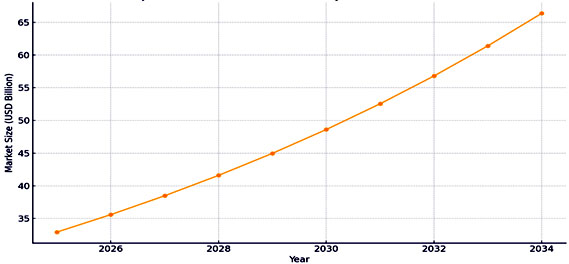
As of 2024, the Indian poultry market is valued at approximately USD 30.46 billion and is projected to grow at a compound annual growth rate (CAGR) of 8.10% between 2025 and 2034, reaching around USD 66.37 billion by 2034.This robust growth is attributed to several factors, including rising disposable incomes, urbanization, and a growing awareness of the nutritional benefits of poultry products.
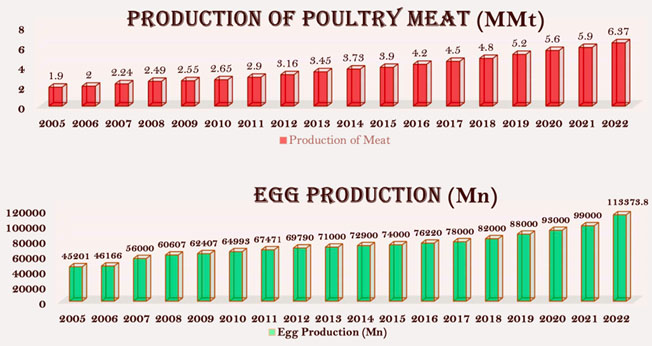
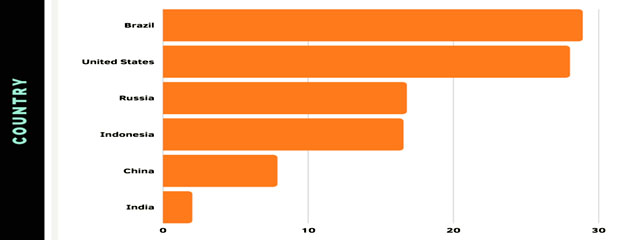
Egg production has seen a significant surge, with annual output surpassing 140 billion eggs. Similarly, broiler meat production has reached approximately 4.5 million tonnes per year. This increase in production is not only meeting domestic demand but also positioning India as a notable player in the global poultry market.
Key Drivers of Growth
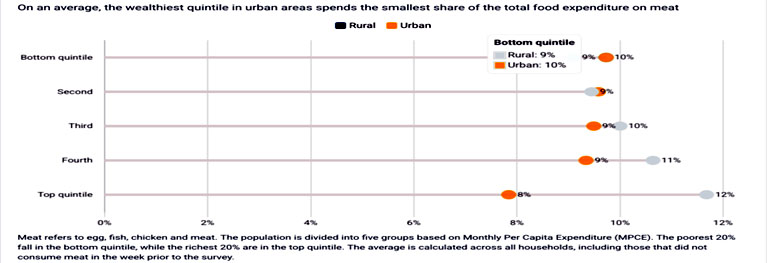
1. Changing Dietary Preferences: There has been a notable shift in Indian dietary habits, with a growing preference for protein-rich foods. Poultry products, being affordable and accessible sources of high-quality protein, have become staples in many households.
2. Technological Advancements: The adoption of modern technologies in breeding, feeding, and disease management has enhanced productivity and efficiency. Innovations such as automated feeding systems, climate-controlled housing, and biosecurity measures have revolutionized poultry farming practices.
3. Vertical Integration: The emergence of vertically integrated poultry companies has streamlined operations, reduced production costs, and ensured quality control. These companies oversee the entire production process, from breeding to retail, facilitating a consistent supply of products.
4. Government Initiatives: Supportive policies and schemes aimed at promoting poultry farming have provided impetus to the sector. Subsidies, training programs, and infrastructure development initiatives have encouraged both small and large-scale poultry farming enterprises.
Export Potential and Challenges
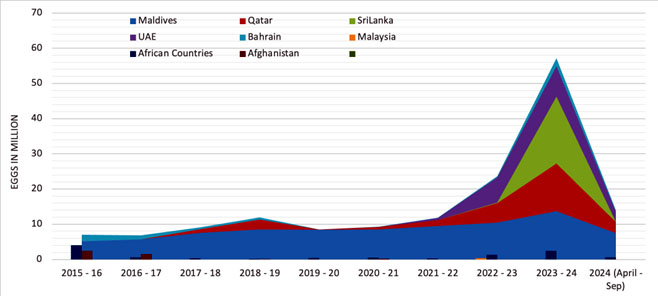
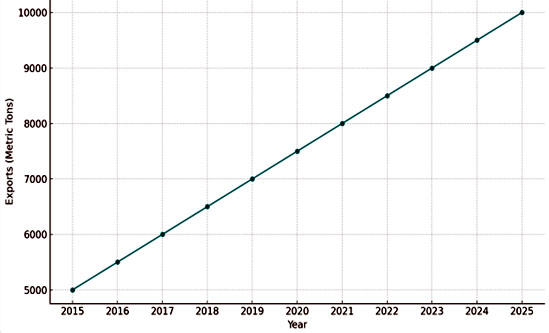
India’s poultry exports have shown promising growth, with the country exporting poultry products worth USD 184.58 million in the 2023-24 financial year. Major export destinations include Oman, Sri Lanka, Maldives, UAE, and Qatar. However, the industry faces challenges such as stringent international quality standards, disease outbreaks like avian influenza, and competition from established exporters. Addressing these challenges through improved biosecurity measures, adherence to international standards, and exploring new markets is crucial for sustaining export growth.
Technology Adoption in the Indian Poultry Sector: A Transformational Leap
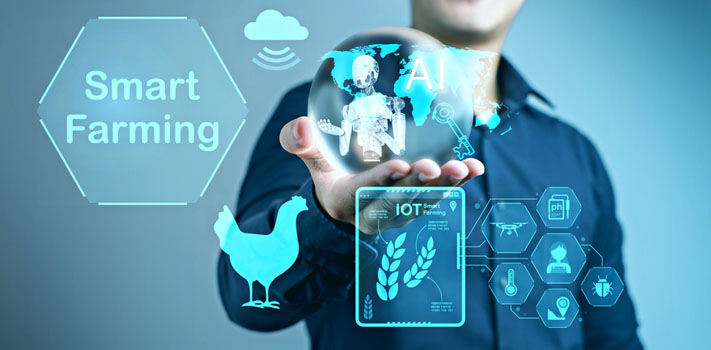
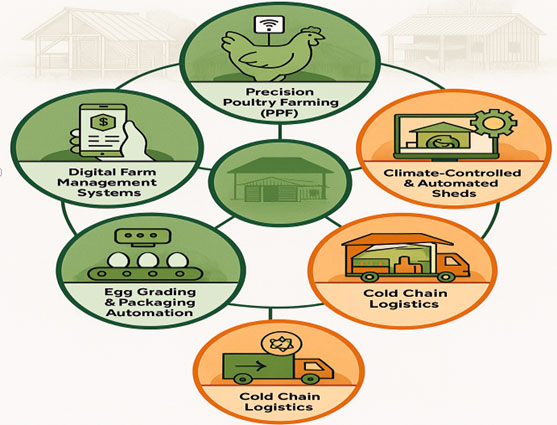 The Indian poultry sector, traditionally driven by manual and conventional practices, is now rapidly embracing modern technologies to enhance productivity, reduce mortality, and ensure sustainable growth. Below is a structured overview of key technology interventions that are shaping the future of poultry in India:
- Precision Poultry Farming (PPF)
- Use of IoT sensors to monitor environmental parameters (temperature, humidity, ammonia levels) inside poultry sheds.
- Real-time tracking of feed intake, water consumption, body weight, and bird behaviour.
- Automation helps in reducing human error, optimizing resources, and improving bird health outcomes.
- Digital Farm Management Systems
- Mobile and cloud-based platforms for farm data entry, inventory management, and mortality tracking.
- Apps for veterinary scheduling, vaccination tracking, and performance analytics. For Example Stellapps: www.stellapps.com) Poultry OS (www.poultryos.com) Farmonaut (www.farmonaut.com) Utpan (www.utpan.info) and other Agri-tech platforms.
- AI & Predictive Analytics
- AI algorithms to predict disease outbreaks, feed conversion ratios (FCR), and weight gain patterns.
- Data-driven decision-making for feed optimization, harvest planning, and flock rotation cycles.
- Helps in early detection of anomalies and prevents revenue losses due to health issues.
- Climate-Controlled & Automated Sheds
- Environmentally controlled housing (ECH) systems for temperature, ventilation, and lighting.
- Use of automated systems for curtain control, forgers, fans, and backup power systems.
- Reduces stress on birds and improves overall productivity and biosecurity.
- Egg Grading, Sorting & Packaging Automation
- Deployment of machines for automated egg grading, weight classification, and detection of cracks.
- Robotic arms and conveyors for packaging and labelling to improve speed and hygiene standards.
- Disease Detection & Vaccine Delivery
- Use of rapid diagnostic kits, biosensors, and lab-on-chip technologies for disease identification.
- Automated vaccine administration and mist sprayers to ensure uniform immunization.
- Genetic Improvement & Hatchery Tech
- Use of genomics and advanced breeding techniques to develop high-yielding, disease-resistant breeds.
- Hatcheries equipped with temperature-controlled incubators, candling automation, and embryo viability monitors.
- Blockchain for Traceability
- Implementation of blockchain technology to ensure full traceability from farm to fork.
- Builds consumer trust and meets global standards for export certification and food safety.
- Financing & Credit through Digital Agri-Fintech
- Integration with fintech platforms for credit scoring, crop/livestock insurance, and working capital support.
- Use of farm performance data for digital lending models and BNPL (Buy Now Pay Later) options for inputs.
- Cold Chain & Logistics Management
- Use of GPS-tracked vehicles, cold storage systems, and route optimization for fresh meat and egg logistics.
- Ensures minimal spoilage, longer shelf-life, and improved market linkage for processed products.

Adoption Challenges
- Limited digital literacy among small farmers
- High initial investment in tech infrastructure
- Lack of last-mile tech support in rural areas
Future Outlook
The future of India’s poultry industry appears promising, with projections indicating continued growth in both production and consumption. The sector is expected to benefit from ongoing investments in infrastructure, research and development, and value-added products. Additionally, the rising popularity of processed and convenience foods presents opportunities for the development of diverse poultry products catering to evolving consumer preferences. Integration of AI + robotics + IoT will redefine scalable poultry operations. India is witnessing a surge in startups and agripreneurs focused on poultry-specific tech solutions. With ESG and traceability gaining importance, technology adoption is no longer optional—it’s essential.
Conclusion
India’s poultry industry exemplifies a successful transformation driven by innovation, adaptability, and strategic planning. As the sector continues to evolve, it holds the potential to contribute significantly to the nation’s economy, nutritional security, and employment generation. By addressing existing challenges and leveraging emerging opportunities, India’s poultry landscape is poised for a future marked by sustained growth and global competitiveness.
References:
https://dgciskol.gov.in
https://www.apeda.gov.in/PoultryProducts?utm_source=chatgpt.com
https://www.technicaltextiles.in/wp-Content/uploads/2024/10/Poultry_Industry_CareEdge_Report.pdf
https://www.poultrytrends.in, http://www.hindpoultry.com
https://www.google.co.in/search?q=household+consumption+expenditure+survey+2023-24
https://www.dgciskol.gov.in