

When the Strait Burns:
The West Asia War and Its Double Impact on India’s Layer and Broiler Sectors
Special Report | Dr Anjan Goswami | March 20, 2026

Strategic Consultant
(Know more …)
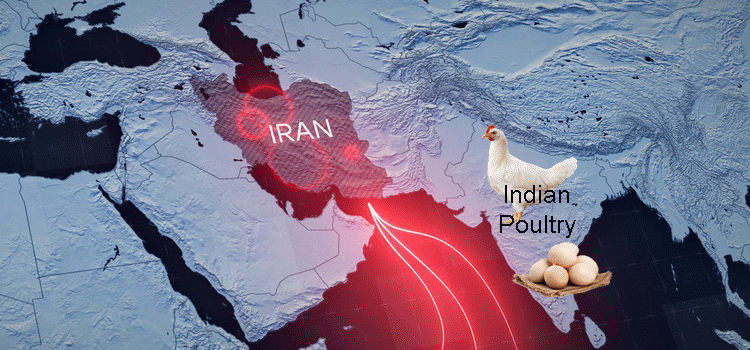
On the morning of March 4, 2026, the Strait of Hormuz, a 33-kilometer chokepoint between Iran and Oman, ceased to function as the world’s most vital energy corridor. Tehran, retaliating against coordinated US-Israeli strikes on its nuclear and military infrastructure, mined the waterway and threatened all commercial shipping. In a single stroke, 20% of global crude supply and over 85% of India’s LPG imports were placed in jeopardy.
The shockwaves struck India’s ₹3.5 lakh crore poultry economy almost immediately, hitting the egg-laying (layer) and broiler (chicken meat) sectors through different but equally devastating channels.
This is the story of how a war 3,000 kilometers away lit a fire at India’s farm gate.

I. Fire in the Gulf: The Energy Architecture Behind the Crisis
The Strait of Hormuz carries ~20% of the world’s petroleum liquids and an equivalent share of LNG annually. India imports 85% of its crude oil, with half transiting Hormuz, and the Gulf supplies 90%+ of its LPG imports. For India’s poultry sector, the devastating blow came not from crude, whose retail price pass-through is gradual, but from LPG and LNG: the gases that power restaurant kitchens, hatchery incubators, feed-processing mills, cold storage, and fertiliser plants simultaneously. Maritime insurance for Gulf-bound vessels surged over 1,000% within days. The government invoked the Essential Commodities Act, directed refineries to maximise LPG output, and prioritised household and CNG supply, leaving the commercial food service sector, India’s largest channel for both egg and chicken consumption, to face an acute supply vacuum.
India holds no strategic reserves of LPG or LNG. Unlike crude oil, these cannot be stockpiled. The disruption at Hormuz has exposed a structural vulnerability hiding in plain sight.”
II. Restaurants Close, Orders Evaporate: The Shared Demand Catastrophe
Commercial LPG – the 19-kg cylinder that powers every hotel, dhaba, cloud kitchen, caterer, and QSR outlet in India became critically scarce within days of the blockade. The government’s allocation framework deprioritised food service. The consequences struck both the egg and broiler supply chains simultaneously and with equal severity.
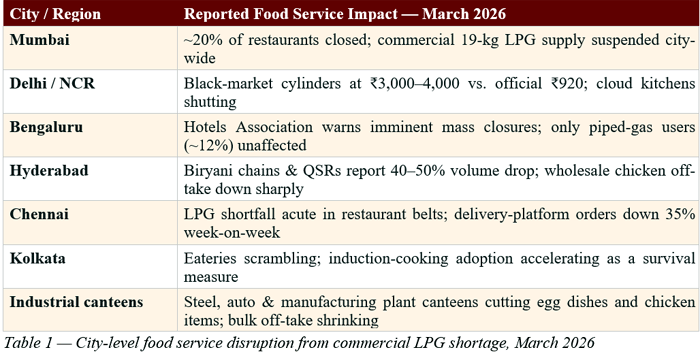
AHAR estimates food service accounts for 25–30% of total egg consumption in major metros; the food service channel’s share of urban broiler meat offtake is estimated at 35–40%. The simultaneous collapse of this channel is producing a paradox in both sectors: input costs are rising at farm level while buyer-side demand has imploded at the same moment. Egg prices at some wholesale markets have softened despite rising production costs; broiler demand in organised channels is contracting even as retail prices at surviving outlets spike amid supply disruptions.
“When restaurants shut, the first items off the menu are egg dishes and chicken preparations. Cancellations are coming from hotels, caterers, and QSR outlets simultaneously.” — Regional distributor, Hyderabad.
LAYER SECTOR — EGG PRODUCTION & EXPORT MARKETS
III. The Layer Sector: Export Routes Severed, Farm Economics Inverted
India is the world’s third-largest egg producer with annual output exceeding 14,200 crore eggs. The country exported ~₹1,500 crore worth of table eggs in 2024-25, with Namakkal in Tamil Nadu accounting for 80–90% of all shipments. That hard-won franchise is now under existential threat.
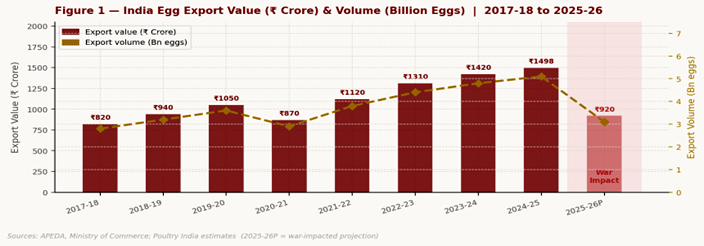
With the Strait closed, vessels bound for UAE, Saudi Arabia, Kuwait, Oman, and Qatar are rerouting around the Cape of Good Hope, adding 10–15 days of transit time. Shipping liners have imposed emergency surcharges, resulting in a three- to five-fold per-container cost increase. Around 40,000–45,000 Indian containers are stranded in transit, with cargo worth $1–1.5 billion in limbo. For perishable egg exporters, where shelf-life and temperature continuity are non-negotiable, these conditions render the majority of consignments commercially unviable. Namakkal exporters have confirmed wholesale cancellations. GTRI estimates India’s total agri-food exports worth USD 11.8 billion to West Asia are at risk. The rupee at a record low of ₹92.28/dollar offers no real offset, dollar-denominated freight surcharges negate the currency benefit entirely.
“India’s egg exporters had finally broken into premium Gulf markets. Now, with freight costs tripling and buyers uncertain about timelines, we cannot confirm a single order.” — Egg exporter, Namakkal cluster
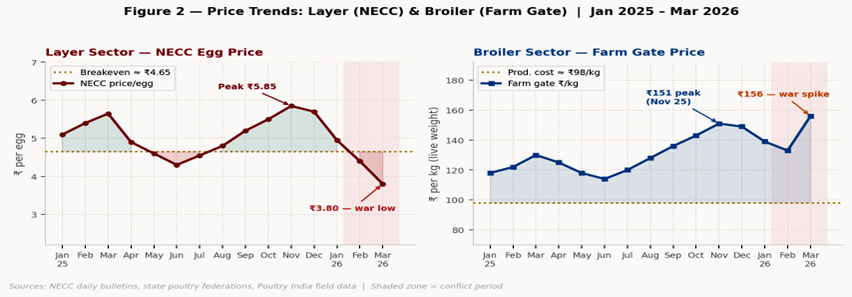
At the domestic farm gate, the layer sector faces a textbook cost-price inversion. The NECC egg rate stood at ₹3.80/egg in early March 2026, well below the estimated production cost of ₹4.65–4.75/egg. With feed costs under fresh upward pressure and energy costs rising, breakeven is likely to climb to ₹5.00–5.25 or higher. The food service demand collapse is simultaneously suppressing prices, the classic layer farmer’s nightmare. Smaller farms that only recently returned after the FY23-24 loss cycle face the prospect of a second successive crisis before full financial recovery.
BROILER SECTOR — CHICKEN MEAT & SUPPLY CHAIN
IV. The Broiler Sector: The Food-Service Pipeline Breaks
The broiler sector’s crisis is rooted in the catastrophic destruction of its primary urban demand channel. Chicken, from biryani and butter chicken to fried chicken at QSR chains, is the dominant animal protein on the Indian restaurant menu. With commercial LPG near-halted across major cities, the food service channel, absorbing 35–40% of all urban broiler offtake has effectively shut down. Broiler production is even more feed-intensive than egg production, with feed constituting 70–72% of live weight production costs. Pre-war, producing 1 kg of live broiler cost ₹95–100 in major Andhra Pradesh and Telangana clusters; with maize under pressure from fuel-driven logistics costs and soybean meal tight globally, that cost is rising toward ₹110–115/kg. Farm gate prices, which peaked at ₹151/kg in November 2025, are being pulled in contradictory directions: downward by the food service demand collapse, upward by the supply-side cost shock.
Cold chain and processing face compound stress: refrigerated transport operators are passing fuel surcharges to processors; cold storage facilities are managing higher electricity tariffs; and the interstate live bird transport network connecting Andhra Pradesh, Telangana, and Maharashtra to metros is becoming unreliable and expensive. Localised gluts are appearing at the farm level even as retail chicken prices in metros begin to spike. Most critically, the supply pipeline is contracting: early signs of reduced day-old chick (DOC) placements are emerging as farmers anticipate sustained losses. A 20–25% reduction in placements now will translate to an equivalent production contraction in 6–8 weeks, the standard grow-out cycle, very likely triggering a sharp price spike on the other side of the current demand-led depression.
“The broiler market is caught between two fires. The restaurants that buy our birds cannot get gas. Our own costs rise every week with fuel and feed. There is no breathing room.” — Integrated broiler producer, Andhra Pradesh
The structural divide between large integrated players — Suguna, Venky’s, IB Group, Shalimar, Premium, Baramati — and independent contract farmers is widening sharply. Integrated players can absorb cost shocks through vertical integration; independent contract farmers are fully exposed to the feed cost spike while losing their primary buyers. The crisis threatens to accelerate consolidation at the direct expense of India’s vast network of small and medium poultry entrepreneurs across India, especially from Andhra Pradesh, Telangana, and Tamil Nadu, and Maharashtra.
V. Feed Costs, Price Reality and the Crisis in Numbers
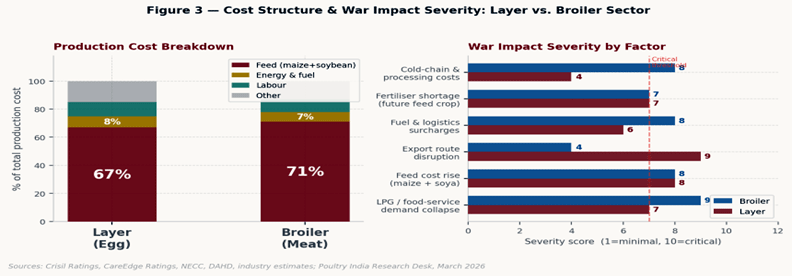
Feed costs, comprising of 67% of layer and 71% of broiler production costs, are the shared vulnerability binding both sectors to Gulf geopolitics. The Indian crude basket jumped 40% between January and March 2026, with diesel cost pressure feeding directly into inter-state maize and soya transport. The medium-term threat is more alarming: India imports ~40% of its total fertiliser from the Gulf. With LNG to fertiliser plants running at ~70% of actual need, major urea producers, including IFFCO, have suspended operations. A fertiliser shortage heading into the Kharif season, accounting for 55% of India’s crop output, could structurally reduce maize and soybean production in 2026-27, locking in elevated feed costs well after any military resolution of the conflict.
VI. Government Response and the Policy Gaps That Must Be Closed
The government’s crisis response contains significant blind spots for the agri-food sector. The ECA allocation framework explicitly deprioritises commercial food service and food processing; there is no strategic reserve for LPG or LNG. The broader macroeconomic environment provides no cushion: ICICI Bank has cut its FY27 GDP forecast 50 basis points to 7.0%; Standard Chartered estimates the current account deficit could reach 2.5% of GDP; the Sensex is down ~10% year-to-date; and banks are tightening credit precisely when poultry farmers need working capital most. Commerce Secretary Rajesh Agarwal has signalled a relief package for exporters — but for perishable, time-sensitive sectors like poultry, medium-term promises deliver no immediate relief.
VII. Urgent Action Required: Layer, Broiler and Structural Reform
Layer sector — immediate priorities
• Emergency credit lines for layer farmers at ₹3.80/egg NECC rates; prevent forced flock liquidation
• Dedicated commercial LPG allocation for egg-processing and value-addition units
• APEDA-led emergency market diversification: fast-track protocols with buyers in East Africa, Southeast Asia, and Central Asia
• Temporary import duty relief on soybean meal, canola meal, and DDGS alternatives
Broiler sector — immediate priorities
• Emergency LPG allocation to food service operators — Dhabas, QSR chains, hotel kitchens to prevent permanent demand channel destruction
• Cold chain support: targeted diesel relief for refrigerated transport operators
• DOC protection: forward purchase commitments to sustain hatchery placement rates and prevent the 6–8 week supply crunch
• State federation coordination to sustain contract farmer relationships; prevent mass exit of small operators
Structural reforms — both sectors
• Build strategic LPG/LNG buffer stock capacity: the absence of any reserve has been catastrophically costly
• Scale up on-farm solar energy: MNRE’s poultry solar scheme should be expanded with enhanced capital subsidies; the economic case is now unarguable
• Feed resilience: integrate DDGS from the Ethanol Blending Programme at scale; invest in alternative protein feed research
• Explore the International North-South Transport Corridor (INSTC) as an alternative agri-export route less exposed to Hormuz disruption
VIII. Conclusion: Both Sectors at a Crossroads
The West Asia war of 2026 has struck India’s poultry sector through channels no conventional risk model had fully mapped. For the layer sector, the crisis has simultaneously severed the export lifeline and collapsed domestic food service demand, while inverting the farm gate economics small layer farmers depend upon. For the broiler sector, the destruction of the food service channel strikes at the heart of its urban demand model, while cost pressures trigger the DOC placement contraction that will create its own supply shock in Q2 2026. The Strait of Hormuz,3,000 kilometres from Namakkal’s egg farms or Hyderabad’s biryani clusters, has proven itself a decisive variable in Indian poultry economics.
India’s poultry sector has survived feed cost crises, avian influenza, demonetisation, COVID-19, and successive boom-bust cycles. Its entrepreneurial resilience, the institutional depth of NECC, and the sheer scale of domestic protein demand remain powerful structural advantages. But the speed and complexity of this crisis demand a policy response that matches its severity, and an honest reckoning with the structural vulnerabilities the war has so brutally exposed.
“The poultry industry has never faced this combination of pressures simultaneously. But it has survived every crisis before. The key this time is speed — of government response, of market adaptation, and of strategic thinking.”
Supply chain resilience, energy sovereignty, and export market diversification are no longer planning aspirations. For India’s layer and broiler farmers alike, they are existential imperatives. The fires of West Asia are burning at the farm gate.
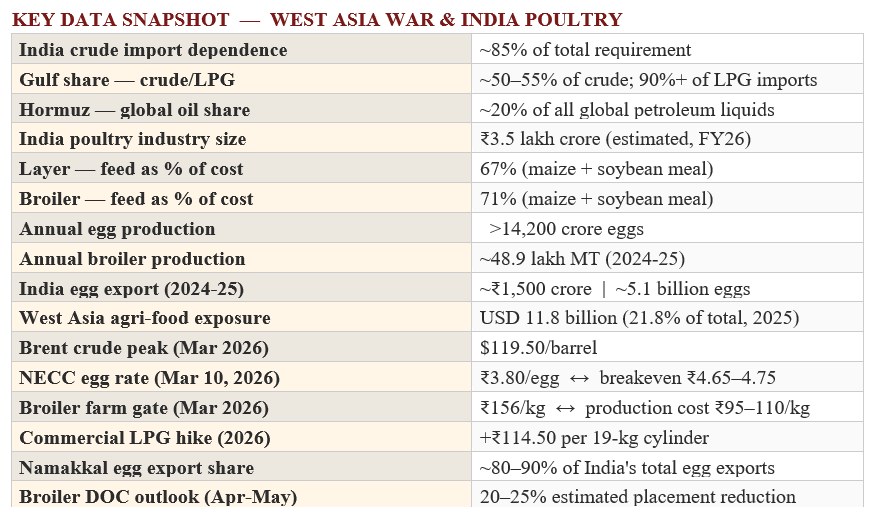 Sources: Business Standard, BusinessToday, The Wire, Outlook Business, GTRI, Crisil Ratings, CareEdge Ratings, PPAC, NECC, APEDA, DAHD, Ministry of Commerce
© 2026 Poultry TRENDS Magazine. All rights reserved. Reproduction with attribution permitted