

Poultry 4.0 : A New Era in Poultry Farming Through Smart Technologies in India
Deesha Gupta (Ph. D Scholar, Animal Genetics and Breeding)
Sher-e-Kashmir University of Agricultural Sciences & Technology of Jammu
Summary: The poultry industry is one of the fastest-growing segments of the agricultural sector worldwide. Pressure on the agricultural system will increase with the continuing expansion of the human population. By the end of 2050, the demand for poultry meat is estimated to double, and the demand for eggs is estimated to increase by 40%, representing an important source of highly valuable and inexpensive protein With increasing demand for affordable sources of protein, particularly chicken meat and eggs; farmers and producers face mounting pressure to enhance efficiency, improve animal welfare, reduce disease outbreaks, and minimize environmental impacts.

Contact
What Is Poultry 4.0?
Poultry 4.0 refers to the application of smart technologies in poultry production to enable real-time monitoring, automation, predictive analytics, and decision-making. It transforms poultry farming from labor-intensive and reactive to automated, predictive, and precise. In general, Industry 4.0 aims to replace manual laboring with automatically and often digitally operated manufacturing and production by implementing such principles as decentralized decision making and information transparency.
Technologies Driving Poultry 4.0:
Health Monitoring and Disease Prediction Artificial Intelligence (AI) enables early detection of diseases by analyzing data from sensors, cameras, and environmental monitors. It identifies subtle behavioral and physiological changes such as variations in feeding, drinking, movement, posture, vocalizations, and litter quality, allowing timely interventions to prevent outbreaks.
Behavior and Welfare Assessment AI-powered vision systems and deep learning models monitor animal behaviors to assess welfare indicators. Parameters such as aggression, crowding, feather loss, wing flapping, and nesting patterns are tracked to ensure optimal living conditions and reduce stress-related issues.
Environmental Control and Precision Farming AI algorithms integrate IoT device data to automatically regulate environmental parameters like temperature, humidity, ventilation, lighting, and gas concentrations (ammonia and CO₂). This ensures stable housing conditions and promotes animal health and productivity.
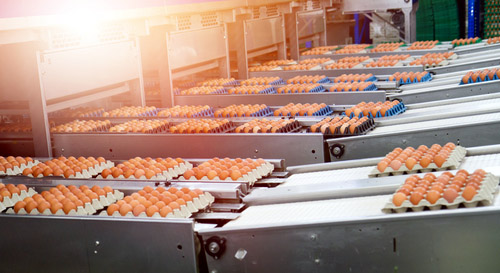
Optimizing Egg Production and Quality AI systems monitor daily egg production, analyze egg characteristics (size, shape, shell quality), and predict peak laying periods. They provide data-driven recommendations for dietary and environmental adjustments to enhance both quantity and quality of egg output.
Feed Management and Supply Chain Optimization AI optimizes feed usage by forecasting requirements based on bird age, behavior, and environmental factors. It minimizes wastage, ensures nutritional balance, and monitors intake in real time. Additionally, AI streamlines logistics by predicting demand and managing supply chains efficiently.
Genetic Improvement and Breeding AI accelerates genetic progress by analyzing genomic and phenotypic data to identify superior traits like rapid growth, disease resistance, and feed efficiency. This facilitates precision breeding programs, reduces generational intervals, and mitigates inbreeding risks.
Robotics and Automation AI-driven robots perform repetitive farm tasks including egg collection, litter cleaning, bird weighing, grading, and shed disinfection. These systems enhance hygiene, reduce labor dependency, and enable continuous monitoring without human fatigue.
Challenges in Implementing Poultry 4.0
High Initial Investment: One of the most critical barriers to implementing Poultry 4.0 is the substantial upfront cost associated with advanced technologies. Smart poultry systems often require the integration of Internet of Things (IoT) devices, machine learning software, automated feeders, climate control equipment, and monitoring cameras—all of which represent a significant capital expenditure.
Digital Literacy: Even when technologies are made available, the lack of digital skills and training among farmers poses a serious limitation. Many poultry farmers, particularly in rural or semi-urban areas, have little exposure to smart farming tools, data analytics, or automation. They may find it challenging to interpret dashboards, operate digital equipment, or troubleshoot system errors.
Data Privacy Concerns: As Poultry 4.0 systems collect massive amounts of real-time data—ranging from flock health and environmental conditions to production and business metrics—data privacy and ownership become crucial issues. Farmers may be uncomfortable or unaware of how their data is stored, who has access to it, and how it is used or monetized.
Infrastructure Gaps: The effectiveness of Poultry 4.0 heavily relies on robust digital infrastructure, particularly high-speed internet and reliable power supply. However, many rural poultry farms—especially in countries like India suffer from poor internet connectivity, frequent power outages, and weak mobile networks.
Resistance to Change: Cultural and psychological resistance also plays a significant role in slowing the adoption of Poultry 4.0. Many traditional farmers rely on their experience, intuition, and legacy practices, and may view automation and AI with skepticism.
Real World Examples
Several innovative companies are driving the adoption of AI and IoT in poultry farming across India and the globe. In India, startups like eFeed and Stellapps are helping small and medium poultry farms optimize feed and monitor flock health through smart sensors and data analytics. Fasal and KrishiHub are expanding their digital platforms to support poultry climate control and supply chain integration, while Animall connects poultry farmers with breeding and health solutions. AgNext is pioneering computer vision for meat and egg quality assessment. Internationally, tech giants like Microsoft (Azure FarmBeats) and Intel are collaborating with poultry farms to deploy cloud-based and edge AI tools for real-time flock tracking. U.S.-based TARGAN uses robotics and AI for chick vaccination and sorting, and Evonik Industries (Germany) applies AI to enhance poultry nutrition.
Future of Poultry 4.0: What’s Next?
AI-Driven Precision Breeding: Artificial Intelligence, combined with genomics, is revolutionizing poultry breeding by enabling precision selection of birds with optimal traits such as disease resistance, feed efficiency, and egg or meat yield. Machine learning models analyze vast genomic datasets alongside phenotypic data to predict which birds will produce the best offspring, drastically reducing the guesswork and time needed in traditional selective breeding.
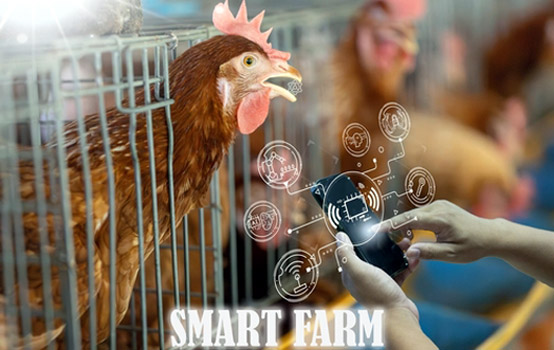
Remote Farming via Mobile Apps: Smartphones are empowering farmers with the ability to remotely monitor and control poultry operations. Through user-friendly mobile apps integrated with IoT systems, farmers can receive real-time alerts on temperature, humidity, feed levels, or bird activity, and can even adjust settings like lighting or ventilation from a distance.
Sustainable Poultry Waste Management: IoT-enabled waste management systems are making poultry farms more sustainable by tracking and managing manure and other waste products. These systems monitor volume, composition, and disposal schedules, and in some cases, automate the conversion of waste into organic compost or biogas.
CRISPR & Gene Editing” The use of CRISPR-Cas9 and other gene-editing tools is opening new doors in poultry genetics. Scientists can now target and edit specific genes responsible for diseases, improving birds’ resistance to conditions like avian influenza or Newcastle disease.
Digital Twins: A digital twin is a virtual replica of a physical poultry farm, created using real-time data from sensors, equipment, and historical performance metrics. These simulations allow farmers and managers to test scenarios—like changes in feed, climate, or disease outbreaks—before applying them in the real world.
Carbon Footprint Monitoring: To address climate impact, blockchain and AI technologies are being deployed to track and reduce the carbon footprint of poultry farms. IoT sensors measure emissions such as methane and ammonia, while blockchain ensures transparent, tamper-proof recording of data.
Conclusion
Poultry 4.0 is not a luxury, it is a necessity in the modern age of climate uncertainty, food safety concerns, and rising demand. It enables producers to raise poultry more efficiently, sustainably, and ethically, while also delivering better value to consumers. The smart poultry management system is a crucial component of a modern poultry farm, but the majority manages the data using outdated technologies and platforms instead of modern IT solutions.
References:
-Bumanis, N., Arhipova, I., Paura, L., Vitols, G., & Jankovska, L. (2022). Data conceptual model for smart poultry farm management system. Procedia Computer Science, 200, (517-526).
-Allotey, D. K., Miezah Kwofie, E., & Wang, D. (2023). Sustainability Implications of Adopting Industry 4.0 at Different Scales in the Poultry Processing Industry. In Sustainable Manufacturing in Industry 4.0: Pathways and Practices (143-156).
-Franzo, G., Legnardi, M., Faustini, G., Tucciarone, C. M., & Cecchinato, M. (2023). When everything becomes bigger: big data for big poultry production. Animals, 13(11), 1804.