

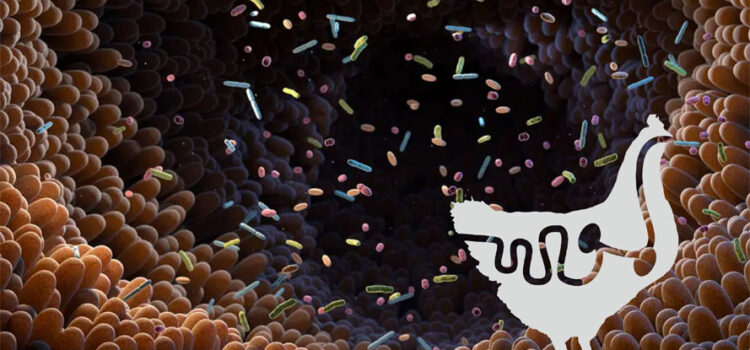
The gut microbiome is essential for the health and productivity of chickens. It provides nutrients from dietary substrates that would otherwise go unused, and it modulates the development and function of the digestive and immune systems. The diversity of the chicken GI microbiota is influenced by the age of the birds, location in the digestive tract, and diet. The gastrointestinal compartments of chickens are densely populated with complex microbial communities (Bacteria, fungi, Archaea, protozoa, and virus) that are dominated by Bacteria (Wei et al., 2013). Bacteria dominate the gastrointestinal compartments, with Firmicutes, Bacteroidetes, and Proteobacteria accounting for most (> 90%) of the intestinal bacteria (Wei et al., 2013 and Pan and Yu, 2014).

Commensal microbiota stimulates the development of the immune system and produces energy and nutrients, such as vitamins, amino acids, and short-chain fatty acids, from undigested feed that eventually becomes available for the host. The gut microbiota also contributes to the metabolism of host nitrogenous compounds to produce amino acids, such as glutamine (Shang et al., 2018). Gut microbiota affects feed conversion ratio, body weight gain, apparent metabolizable energy, residual feed intake, and time taken to attain the desired weight, which have a direct influence on the health and productivity of chickens (Iqbal et al., 2020).
However, factors like the environment, feed, heat stress, and housing conditions can cause detrimental changes in the gut resulting in poor health of birds and decreased production performance (Iqbal et al., 2020). When the normal gut microbiota deviates, “Dysbiosis” occurs, which refers to qualitative or quantitative imbalances of microbial populations from normal proportions in the gut (Teirlynck et al., 2011).
 Polyphenols can be used to improve gut health due to their established health benefits and strong antioxidant potential. The gut microbiota-polyphenol interactions are vital in their effects on the gut microbiota modulation. It affects not only the composition of gut bacteria but also improves the bioavailability of polyphenols by generating more bioactive metabolites that enhance their health effects on the morphology and composition of the gut microbiota (Iqbal et al., 2020). Plant additives, such as phytogenic feed additives, can improve the absorption, use, and absorption of valuable nutrients and stimulate the immune system. They often improve palatability and feed conversion, leading to improved efficiency of poultry rearing (Windisch et al., 2008).
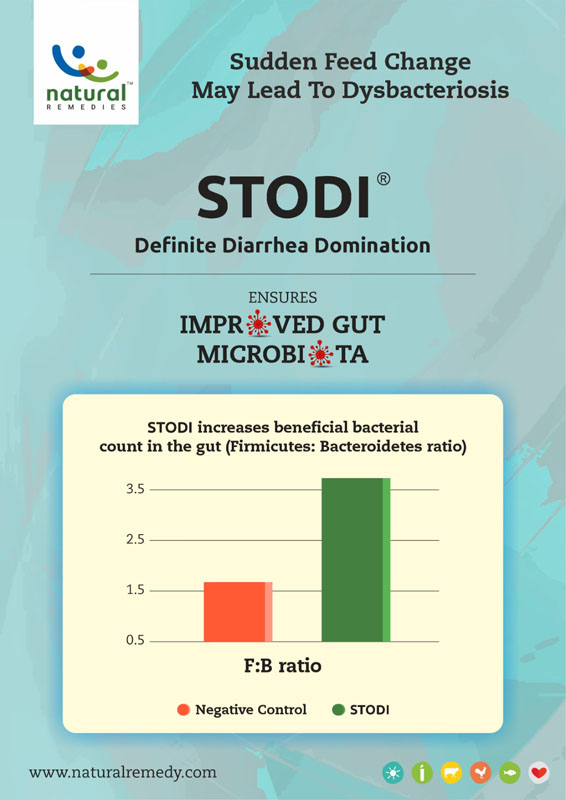
STODI is a Standardized Polyherbal Formulation of several Indian medicinal plants traditionally known and used for gut health, and it contains fruit rinds of Punica granatum, aerial parts of Andrographis paniculata, bark of Acacia nilotica, fruits of Terminalia bellirica, and bark of Holarrhena antidysenterica. In research, STODI in the diet of broilers produced a shift in the caecal microbiota conducive to gut health and better performance characteristics. STODI caused a favourable improvement in Firmicutes, Clostridiales, and Ruminococcaceae and Lachnospiraceae. This improvement led to better utilization of carbohydrates and the production of SCFAs that contributed to energy production and gut health (Marimuthu et al., 2019).
In conclusion, polyherbal formulations can facilitate a balanced F:B ratio, promoting gut health and overall performance in poultry. By using herbs with complementary pharmacological properties, polyherbal formulations can provide a broad spectrum of benefits, including anti-inflammatory, antioxidant. The use of polyherbal formulations in poultry production can reduce the need for antibiotics and other interventions while promoting sustainable and responsible production practices.
References
• Pan, D. and Yu, Z., 2014. Intestinal microbiome of poultry and its interaction with host and diet. Gut microbes, 5(1), pp.108-119.
• Wei S, Morrison M, Yu Z. Bacterial census of poultry intestinal microbiome. Poult Sci Sympos. (2013) 92:671–83.
• Shang, Y., Kumar, S., Oakley, B. and Kim, W.K., 2018. Chicken gut microbiota: importance and detection technology. Frontiers in veterinary science, 5, p.254.
• Teirlynck E., Gussem M.D.E., Dewulf J., Haesebrouck F., Ducatelle R., Van Immerseel F. Morphometric evaluation of “dysbacteriosis” in broilers. Avian Pathol. 2011
• Iqbal, Y., Cottrell, J.J., Suleria, H.A. and Dunshea, F.R., 2020. Gut microbiota-polyphenol interactions in chicken: A review. Animals, 10(8), p.1391.
• Windisch W, Schedle K, Plitzner C. Kroismayr A: Use of phytogenic products as feed additives for swine and poultry. Journal of Animal Science. 2008;86:140-148.
• Marimuthu, S.K., Balasubramanian, B., Selvam, R. and D’Souza, P., 2019. Modulation of chicken cecal microbiota by a phytogenic feed additive, Stodi®: a metagenomic analysis. Pharmacognosy Research, 11(3).
Article by same authors: Role Of GALT In Optimizing Gut Immunity









 Gut immunity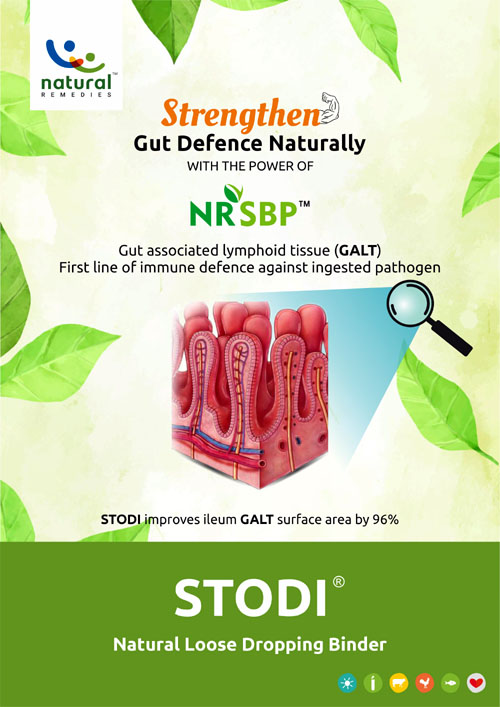


 “It’s very exciting for the Philippines poultry and livestock industry to be part of this globally competitive landscape. This is the opportunity for our stakeholders to become engaged and really take advantage of the technological innovations and advancements as they come and reach our shores. With the promising developments in our national economy, coupled with a growing population. This is our chance to emerge as a stronger, more resilient, more sustainable, and more innovative industry.” said Mr. Jose Gerardo Feliciano, Exhibit chairman of Philippine Poultry Show.
 leader of the country providing protein-rich foods has always been our prime objective. We are India’s leading poultry group with diversified operations that extend to hatcheries, feed mills, processing plants, animal healthcare products, and nutrition supplements. We are excited to extend our support to the ‘Right to Protein’ initiative and to also adopt the ‘Soy Fed Product’ label that will help highlight the role of high-quality protein feed, such as soy, to improve the protein content of animal-based foods. We believe this initiative will help consumers choose quality animal protein sources and understand the nutritional benefits of the feed to the food. Consumers are increasingly relying on trusted brands like ours for quality and transparency, which motivates us to further reassure them of our commitment to their growing needs.”
 Highlighting the booming aquaculture sector in the Philippines
 Livestock Philippines is among the series of livestock shows in Southeast Asia organized by Informa Markets. Since 2011, Informa Markets has successfully held Livestock Philippines which has become the official hub of the livestock and poultry sectors in the country as it continuously creates new opportunities for livestock, poultry, and most recently, to work more in aquaculture. For more than a decade, the show has evolved into a centerpiece for markets, buyers, and traders as it has effectively connected the industry’s value chain from the domestic front up to the global scale which significantly helped improve the country’s livestock and feed production.