We are glad to welcome Dr Rajeeb Kumar Roy to RR Animal Health Care Limited as Manager – Technical Sales & Services. Dr Rajeeb Kumar will be responsible for Key Client Management & Technical support to the sales team in Northern region of India. Dr Rajeeb Kumar is Masters in Veterinary Science (MVSc) in Pharmacology & Toxicology from Sher-e-Kashmir University of Agricultural Science & Technology, Jammu.
Dr Rajeeb Kumar has an illustrious career that started with PRADAN, Jharkhand in 2002 just after doing BVSc & AH. In 2005, he went to pursue MVSc & after completion started his work as an academician at Apollo College of Veterinary Medicine, Jaipur & then in College of Agriculture & Veterinary Science, Ambo University, Ambo Ethiopia, Africa. Once back to India in 2016, Dr Rajeeb started his career in Poultry Industry by joining Zydus AHL. Prior to joining us Dr Rajeeb was working with Elanco India Pvt Ltd as Asst Manager-Technical Services.
Dr Rajeeb is based at Karnal, Haryana, India and can be reached at his phone number +91 73804 43854 and mail id rajeebkumar.roy@rrahc.in
RR Animal Health Care Ltd is a company with diversified interested in Animal and Human Health & Nutrition segment. With over 12 years of legacy, this company has established itself with unique solutions for Human, Poultry, Aqua and Livestock management in India. With 3 manufacturing facilities in India, the company is committed to deliver value to its customers across diversified species & segments. Pioneer in farm biosecurity segment with new concepts, the company is well recognized as a ‘Unique Solution Provider’ across industries.
About the author: Mr. Pattabiraman Nagarajan is a HR professional, Consultant, trainer and an ICF certified coach. Has managed organization change and aligned HR practices to ensure business growth. He holds master degree in Social work and a PG Diploma in Business Management from IIM Trichy. He could be reached at npattabiraman@relyonus.in
In this current pandemic are you feeling that your physical and psychological reserves are tested? Do you think there is a threat of imminent crisis? You are not alone as the current pandemic is taking its toll on everyone.
While the pandemic has impacted everyone, what would explain the differential performance. IPL 2020 was successful while IPL 2021 had to be abandoned. Countries like New Zealand, Australia, Israel, South Korea have managed to contain covid infections while others like India are witnessing a huge surge? How is Tesla managing to continue strong performance while other auto majors are struggling? If the pandemic was to cause a damage it should have impacted all.
The answer to this question lies in the belief that Adversity causes crisis. We have little control over the events. While it is true that an adversity like the current pandemic has the potential to cause crisis it is not the only outcome. While it is true that we may not have control over these macro events, that does not mean we could do nothing about it. In my assessment what causes crisis in an adversity is our response. The way we perceive the adversity and what actions do we take (or we do not take) results in we are emerging successful or falling into crisis.
American psychologist Martin Selignam, in his book titled “Learned Optimism” provides a very simple framework as to how could we learn to be optimistic when faced with an adversity. He talks about the ABCDE model which us given below.
ABCDE model
He says that Optimism could be learnt and that would help people manage adversities. This applies to leaders as well. Reason being we have been facing one adversity or other every 10-15 years.
This model speaks against the idea of giving up when faced with a difficulty and stresses on the benefit of more positive inner dialogue. This skill could help everyone cope up with problems and realize their potential. It forces us to believe that problems are temporary and limited in scope.
Leaders would benefit immensely by reading this book which would change the way they perceive adversity.
In this article, I would like to share my experience from my corporate experience where the organization I was working with managed a severe adversity and apply those actions to this ABCDE framework.
With 50% of our raw materials being imported, we saw a sudden 20% depreciation of INR, huge spike in raw material prices and Payment delays from customers owing to huge credit crunch caused by global slowdown. In matter of 45 days, we had a huge hit in our Gross margins, sales revenues with mounting working capital management problems. So, theadversity was a sudden dip in both topline and bottom line. This made us believe that noting was under our control and expected the business to further decline. The consequence of this belief was fear, panic, and negativity. Then we started to think as to what we could do given this situation and started to dispute our belief. This was where our organization took a different part than our competitors. We dismantled the issues part by part and started thinking as to what we could do to mitigate. Given below are the actions;
Currency fluctuation – We concluded that this issue is going to be of perineal nature and wanted to be in a position to not to let it affect our margins. We wanted to hedge the risk and after lot of discussions, we decided to achieve natural hedge by focusing on exports which was done in US$.
Payment delays – An analysis of our AR issues revealed an interesting trend. Those customers who used to pay on time, continued to pay on time and those who used to delay did not pay at all. The answer was a tight credit policy
RM Prices – Out of the 2-3 raw materials that had the highest value, we found one of them did not have a local substitute. Hence, we decided to partner with the suppliers of this RM on a global basis with a focus of managing the cost of use. This was a liquid, and we were buying them in barrels. Barrels were expensive because handling, storing, and disposing them required lot of efforts and resources. We decided that we needed bulk storage and approached a supplier with a long-term contract if he agreed to build a storage tank at his expenses in our premises. This worked and we could achieve significant savings.
Tiger teams were formed to get these projects moving and we had clear goals with set milestones. This was communicated to all employees to build energy around these actions and shift focus on the adversity. The belief that we could not do anything, and the feeling of fear were replaced with credible actions and hope. Our organization emerged stronger from the adversity while several of our competitors were still struggling to gain the lost ground. No wonder that this organization maintains a healthy 23% CAGR.
As a leader we may need to focus on taking credible actions and inspire others to work toward ways of successfully accomplishing our goals. We should not let adversity impact our ability to help our organization succeed. Noted American singer Jimmy Dean said “I can’t change the direction of the wind, but I can adjust my sails to always reach my destination” very true.
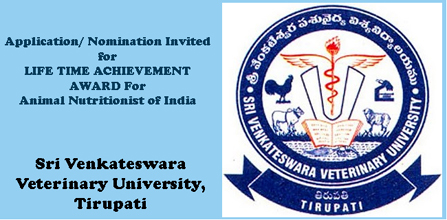
APPLICATIONS / NOMINATIONS Invited for “PROF.D. Anjaneya Prasad LIFE TIME ACHIEVEMENT AWARD FOR Animal Nutritionist of India
Background: PROF.D. ANJANEYA PRASAD LIFE TIME ACHIEVEMENT AWARD FOR ANIMAL NUTRITIONIST OF INDIA was instituted in the honour of Prof. D. Anjaneya Prasad, Eminent Animal Nutritionist and Former Dean, Faculty of Veterinary Science, Acharya N.G.Ranga Agricultural University, Hyderabad by Dr. Pratap V. Reddy, DVM. Ph.D, his students and Alumnus of College of Veterinary Science, Tirupati and President and CEO of Nu Tech Biosciences Inc. New York State, USA in the year 2016.
The Award: The award caries a cash award of Rupees one lakh and a Citation.
The award is presented biennially during convocation of Sri Venkateswara Veterinary University, Tirupati to an Animal Nutritionist of India with vast experience in Teaching / Research / Extension / Industry with outstanding contribution to the discipline of Animal Nutrition including Poultry and Aqua Nutrition.
Who can Apply: Application / Nominations are invited for the Award of outstanding Animal Nutritionist for the biennium 2019-2020 which is proposed to be presented during ensuing Annual Convocation of Sri Venkateswara Veterinary University, Tirupati during Month of June/ July 2021 at Tirupati. Applications can be submitted by Candidates/ Nominations can be made by Vice-Chancellors of SAUs / SVUs, Directors of ICAR/ CSIR/ DST/ DBT institutions, Secretaries of Scientific departments of State and Central Governments, Presidents of National Science Academies, Director Generals of ICAR/ CSIR, Chairpersons/ Managing Directors of Public / Private organizations and NGOs.
How to Submit: The applications/ Nominations have to be submitted in 4 sets in bound form. No reprints shall be attached to the application. However, to avoid postal delay, PDF Version of Signed Application can be sent by e mail also.
The Process: The Vice- Chancellor of Sri Venkateswara Veterinary University, Tirupati shall constitute a committee of three Eminent Veterinarians not connected with SVVU during the year of award for screening the applications and suggest the panel of not more than three in the order of Merit. The University shall have the discretion not to present the award in any year, if in its opinion none of the candidates deserve the award.
Deadline: The Applications / Nominations should reach the following address by 5 PM, 10 June 2021. The notification and application format are available HERE
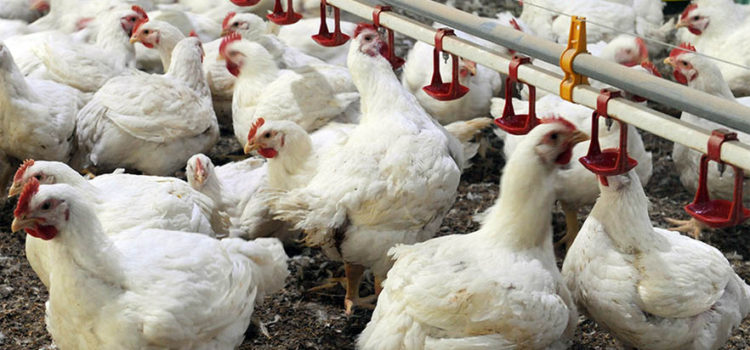
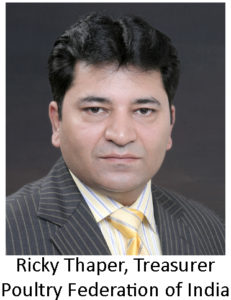
After dealing with challenges posed by COVID pandemic, Indian poultry industry is now focusing on key aspects like automation at farm level and adoption of stringent bio-safety norms at the farm so that occurrence of viral outbreak could be curbed or reduced. The sustained demand because of a spike in online sales and home delivery of chicken and eggs during the current phase of localised lockdowns is good indicators for the future growth of the poultry industry. Training of manpower (those engaged in online sales as well as wet markets who are carrying out home delivery of meat products) on food safety aspects would go a long way in sustaining the future growth of the poultry industry.
Indian broiler meat industry has been experiencing growth driven by increase in per capita consumption. Poultry, which includes broiler as well as egg sector, is one of the fastest growing segments of the agricultural sector in the country. While crops production has witnessed around 1.5% to 2% annual growth rate in the last decade, eggs and broilers segments have been rising at a rate of 7-10% annually.
The sustained growth in the broiler industry has been the result of technological breakthroughs in breeding, feeding and health, mostly driven by private sector investment. The broiler industry is witnessing growth because of adoption of the integration system which provides opportunities for the rural masses getting support in terms of assured remunerations.
The wet market, which has a major share in distribution and sales of broiler meat, has also witnessed a major shift as consumers are opting for home delivery. This new segment which focuses on ‘home delivery’ is expected to drive consumption of broilers in coming months and is expected to have a significant share of the consumption basket. The wet market now needs to invest on training of manpower as well as equipment to ensure that broiler meat is delivered taking into consideration hygienic and health aspects. One of the biggest segments which has witnessed growth in the last one year has been the ‘online models’ where consumers are ordering broiler meat and products for delivery at home, as a large segment of population are staying at home because of restrictions imposed to control COVID and companies opting for Work from Home (WFH) mode. Various players in the ‘online or home delivery’ segment are growing at significant pace as consumers’ preference for getting poultry meat delivered at home.
The commercial broiler industry is now following the ‘integrators model’ where there is contract with multiple smaller farmers who rear the chicks. The live birds are then lifted by the integrators, either for direct sales via wet markets or for slaughter and further processing. In the contract farming, rearing charge prices are pre-fixed to ensure that farmers are largely insulated from the fluctuations in the market demand. Due to challenges faced by the broiler industry since the beginning of last year, most of the losses incurred due to fluctuations in demand are absorbed by integrators thus helping farmers in tiding over the crisis.
With rising cost of labour, there is greater need for the farmers to adopt automation. Ensuring hygienic environment, adoption of food safety regulations etc. and sometimes non-remunerative prices for broiler meat is posing a challenge to the cost effectiveness. With the adoption of automation, feed wastage / shortage of labour and other inputs could be optimised and reduced. Use of Artificial Intelligence could help to address many challenges, reducing human interference and improve efficiency of poultry farming. The government must step in to provide support to the farmers. The Rs 15,000 crore Animal Husbandry Infrastructure Development Fund announced in June, 2020 by the government should be used for supporting farmers in automation also.
The rising feed costs because of higher rates of feed ingredients, mainly corn and soybean meal, prices are pushing up the cost of production of broilers and eggs. The government must ensure availability of feed raw material, either by discontinuing exports for a few months or allowing import of feed ingredients at zero percentage duty during shortage period so that broiler and egg production remains economically viable.
It is estimated that the poultry sector provides direct benefit to around 10 million maize and soybean growing farmers while around 50 million people are associated with poultry production value chain – trade, feed manufacturing, agriculture crops and logistics.
There is an urgent need for the farmers to follow stringent bio-safety norms. The poultry industry in association with government both at the centre and states should chart out and implement stringent bio-security protocols at the farm levels. Overall, the poultry industry is gearing up for meeting the future challenges through adoption of various measures in bio-safety and ensuring consumer confidence in broiler meat and eggs.
The livestock sector, especially poultry meat, eggs, fisheries & aquaculture, is contributing to the growth of agriculture and allied sectors in the country. For realizing the Government’s aim of doubling farmers’ income by 2022, livestock is playing a paramount role and the government must provide sustained support to the sector. For boosting farmers’ income, the government must provide financial as well as technological support to livestock in general and poultry industry in particular. This would boost the growth of Indian economy in the coming years.
What three decades in agriculture means for the feed additive company
NOVUS INTERNATIONAL, INC
SAINT CHARLES, MO (June 1, 2021) – On June 6, Novus celebrates 30 years of supporting animal Protein producers globally who are working to feed the world.
In 1991, Novus International, Inc. was founded with a mission “to make a clear difference in sustainability meeting the growing global need for nutrition and health.” The outcome of Novus’s mission statement is clear – the availability of healthy and affordable animal protein can positively impact populations, particularly when produced with regard for environmental impacts, feed costs and animal performance. Looking back at the last three decades, Novus President and CEO Dan Meagher said the company has always endeavored to offer solutions for the industry’s biggest challenges.
This month Novus International, Inc., celebrates 30 years of providing solutions, service and sustainability to the animal agriculture industry. This abridged timeline shows key product launches and company growth during the last three decades
“Achieving performance and profit goals while optimizing animal health are challenges for every producer regardless of operation size,” he said. “There are many purposes for feed additives. For us, the purpose is to ensure the nutrients in raw feed are available to the animal, support the animal’s gut health to optimize the nutrition it receives from the feed, and to provide the animal with what it can’t get from raw feed materials to better prepare it for the health challenges it may encounter during its life. Regardless of the products we’ve offered over the years, focus on these objectives is how Novus helps its customers globally.”
Novus’s foundation began with methionine. In a joint partnership established in 1991, Mitsui & Co., Ltd., and Nippon Soda Co., Ltd., acquired the rights to ALIMET® feed supplement and SANTOQUIN® feed preservative*, creating the company with a source of methionine as its flagship product. From there, methionine solutions MHA® feed supplement and MFP® feed supplement were added to the portfolio. Novus’s next innovation was the MINTREX® trace minerals line, which includes organic sources of zinc, copper and manganese bonded to the HMTBa (hydroxy methionine analogue) molecule allowing for better absorption and mineral availability. ACIDOMATRIX™ feed additive and ACTIVATE® nutritional feed acid, both offering combinations of organic acids and HMTBa, were created for the eubiotics portfolio. Other organic acids, essential oils and the CIBENZA® enzyme platform were added, as were pigment and feed quality products before being sold to EW Nutrition earlier this year. The sale was part of a re-focusing currently underway for the company: its Project Destiny strategic business transformation, which includes the goal of becoming the industry’s go-to source for gut health nutrition solutions.
“Food production is changing with a strong focus on sustainability, animal welfare/health, efficiency, and other drivers directly related to gut health,” said David Dowell, executive vice president and chief operating officer. “Health through nutrition has been a long-time principle in human health and Novus wants to expand our solutions in the key area of growth for our industry.”
As part of the renewed focus on innovation, Novus announced its partnership with biotechnology company Agrivida Inc. to develop an innovation pipeline of products using INTERIUS™ Technology; the first in-grain-based feed additive platform commercially available to animal nutritionists and feed formulators. Novus is also working to commercialize the flagship product GRAINZYME® PHOS phytase which uses the technology to produce the enzyme inside corn kernels, thus eliminating processes and costs in feed production.
“As a part of this industry, it’s important that we’re aware of the resources we use. Expressing feed additives directly inside grain is an exciting way to do more with less,” said Chief Innovation Officer Al Zimmerman.
Doing more with less also applies to the company’s commemoration of its anniversary. Since the pandemic is prohibiting Novus from celebrating in-person, it is taking the message to the web. During the upcoming months Novus social media followers will see video and images on what 30 years means for those closest to the company – its employees.
“There’s nothing I would like more than to take a world tour to celebrate this anniversary with every employee but that’s just not feasible,” Meagher said. “We’re having a toned-down, socially-distant anniversary instead, which is really unfortunate since the employees are the reason for Novus’s success. We have hard-working, dedicated, intelligent people at every level of our company, and they each deserve a standing ovation.”
Vice President and Chief Human Resources Officer Maria Burt echoed Meagher’s statement on the need to celebrate all that employees have achieved, particularly during the pandemic.
“Our colleagues have gone above and beyond in so many ways throughout the pandemic. All of those challenges, coupled with big changes in our company, would have been daunting for anyone, but they have shown their commitment, ingenuity and grit through it all. They are a truly excellent group,” she said.
What will the next 30 years look like? Meagher said Project Destiny is paving the way for a Novus known more for its partnerships with customers than its product line.
“There’s no question that our solutions – methionine, minerals, enzymes, organic acids, essential oils – can help our customers with their operations but we want to be more than that. Our goal is for customers to look at Novus as a trusted advisor that is going to help make their business more sustainable financially and environmentally.”
The new goals and direction of the company are wholly supported and commended by Novus’s Board of Directors. In a statement, Tetsu Watanabe, Novus chairman of the board and senior vice president of Mitsui & Co. (U.S.A.), Inc., congratulated Novus employees on the 30th anniversary and said the Board is eager to see what comes next.
“Since its formation, Novus has been an integral part of our strategy and we have worked hand-in-hand with Novus to help ‘Feed the World’,” he said. “As always, we fully support the transformation and growth of Novus as it endeavors to be the provider of viable solutions for the industry. We are pleased to see that the organization is going down the right path.”
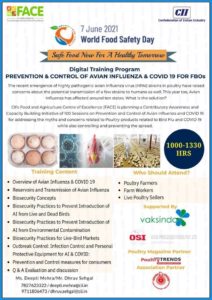
The recent emergence of highly pathogenic avian influenza virus ( HPAI ) strains in poultry have raised concerns about the potential pandemic transmission of a few strains to humans as well of the lethal disease. This year too, Avian Influenza has affected around ten states.
India consumes nearly 30 crore eggs and 900 crore chickens per month and the poultry sector of the country is worth Rs 80,000 crore. The livelihood of crores involved in the industry is set to be impacted as the bird flu scare will discourage more and more people from consuming poultry and poultry products. The economic impact of a bird flu outbreak can be far-reaching.
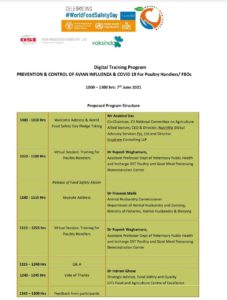
CII’s Food and Agriculture Centre of Excellence (FACE) is planning a Contributory Awareness and Capacity Building Initiative of 100 Sessions on Prevention and Control of Avian Influenza and COVID 19 for addressing the myths and concerns related to Poultry products related to Bird Flu and COVID 19 while also controlling and preventing the spread.
We are pleased to share that we are featuring in the WFSD website of FAO/WHO site for our Program on 7th June.
The session is scheduled at 1000-1300 hrs on 7th June 2021.
The Link is appended below for your reference. Kindly join along with your colleagues
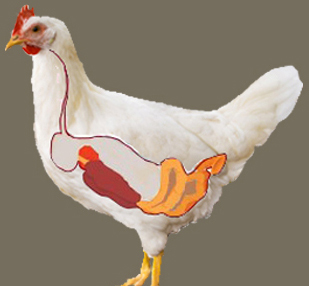
Stress is a method adopted by the body to cope with any challenge. Birds in particular are very sensitive to environment challenges such as high ambient temperatures which cause heat stress.
Nutrex NV, Belgium
In poultry, heat stress has undesirable effects on gut health, nutrient digestion and absorption, the immune system and increases the oxidative stress levels, leading to a decrease in productivity and increase in economic losses for producers.
Gut health
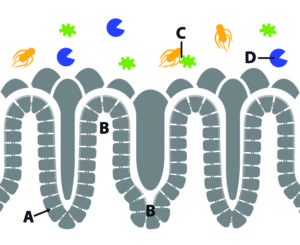
The gastrointestinal tract is particularly responsive to stressors. Under heat stress conditions, morphological and physiological changes are observed which negatively affect the functionality and integrity of the intestinal epithelium and increase the susceptibility to diseases such as Salmonella spp. infections. Heat stress affects the gut permeability due to the disruption and alteration of the tight junction proteins. Also, through vasodilation, heat stress reduces the blood flow to the epithelial cells, resulting in a lower supply of oxygen and nutrients to the enterocytes. Next to the increase of gut permeability, heat stress also affects the intestinal microbial populations. Heat stress increases the abundance of harmful bacteria while decreasing the abundance of beneficial bacteria. This profoundly changed microbiota population also contributes to an increased gut permeability and immune and metabolic dysfunction.
Figure: The gastrointestinal tract is particularly responsive to stressors whereby the tight junctions (A), villi height and crypt depth (B), the microbiota composition (C) and the digestive enzymes (D) are affected.
Nutrient absorption and digestion
The gut plays a vital role in nutrient absorption and digestion. Morphological alterations of the gut epithelium are observed in heat-stressed poultry. Villus height, crypt depth, villus width, and/or the ratio of villus height to crypt depth are all affected by heat stress, resulting in a reduced villus absorptive surface area and a negative impact on nutrient absorption. In addition, nutrient absorption is reduced due to changes in the expression of intestinal nutrient transporters. Besides the fact that heat stressed birds reduce their feed consumption, heat stress also leads to a reduced dietary digestibility. The digestibility of carbohydrates, proteins and lipids is reduced by alterations in the activities of digestive enzymes such as amylase, maltase, lipase, trypsin and chymotrypsin. Ultimately, certain essential nutrients such as proteins, amino acids, minerals and vitamins become deficient.
Immune system
Heat stress increases susceptibility to diseases in poultry as it has an immunosuppressing effect. The function of the lymphoid tissues such as the thymus, spleen and bursa, is decreased during heat stress. Lower levels of total circulating antibodies are observed resulting in a reduced vaccination efficiency. The function of macrophages is also negatively affected by heat stress. Their number performing phagocytosis as well as their phagocytic ability and their participation in oxidative burst is reduced, resulting in a less effective immune response.
Oxidative stress
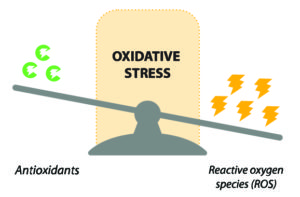
Under environmental stress conditions, like heat stress, cells have a higher energy need and consume double the amount of energy as usual. To fulfil this need, the energy metabolism increases leading to a higher electron leakage out of the electron transport chain in the mitochondria and an increased production of reactive oxygen species. In addition, the increasing concentration of ROS during oxidative stress contributes to an increased intestinal permeability, which facilitates the translocation of bacteria. Furthermore, animals experiencing heat stress have a reduced antioxidant capacity. Consequently, the bird’s body will enter a stage of oxidative stress that will damage cells and tissues and causes a further decrease in the bird’s performance.
Growth and production
For birds to maintain their normal body temperature and metabolic activities when they are outside of their thermoneutral zone, they have to consume energy that would preferably be used for growth and meat/egg production. When birds are panting to lose heat, they lose 540 kcal of energy for every 1 ml of water evaporation. Additionally, during heat stress, feed consumption decreases while water intake increases resulting in a higher feed conversion rate and a lower weight gain and dressing percentage in broilers. Layer and breeder flocks exhibit a decrease in egg production, size and shell quality, hatchability and fertility due to heat stress.
The recent emergence of highly pathogenic avian influenza virus (HPAI) strains in poultry have raised concerns about the potential pandemic transmission of a few strains to humans as well of the lethal disease. This year too, Avian Influenza has affected around ten states.
India consumes nearly 30 crore eggs and 900 crore chickens per month and the poultry sector of the country is worth Rs 80,000 crore. The livelihood of crores involved in the industry is set to be impacted as the bird flu scare will discourage more and more people from consuming poultry and poultry products. The economic impact of a bird flu outbreak can be far-reaching.
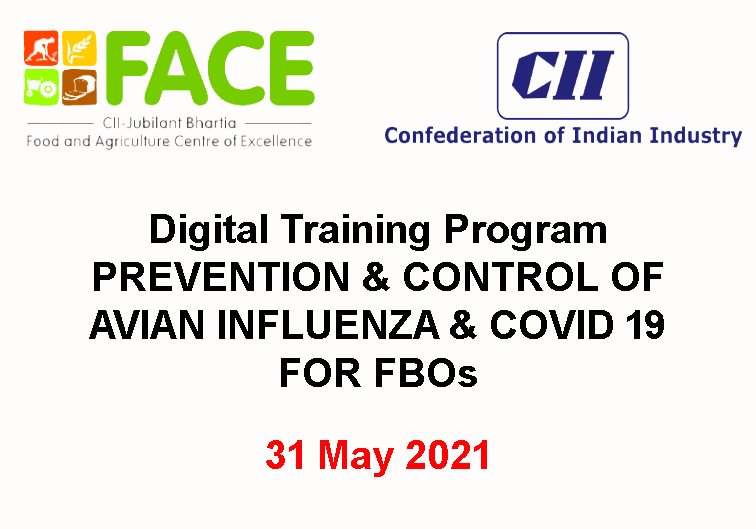
CII’s Food and Agriculture Centre of Excellence (FACE) is planning a Contributory Awareness and Capacity Building Initiative of 100 Sessions on Prevention and Control of Avian Influenza and COVID 19 for addressing the myths and concerns related to Poultry products related to Bird Flu and COVID 19 while also controlling and preventing the spread.
The session is scheduled at 1000-1300 hrs on 31st May 2021.
Kindly join along with your colleagues. To Register/ join, click HERE.
Training Content
Overview of Avian Influenza & COVID 19
Reservoirs and Transmission of Avian Influenza
Biosecurity Concepts
Biosecurity Practices to Prevent Introduction of
– AI from Live and Dead birds
– AI from Environment Contamination
Biosecurity Practices for Live- Bird Markets
Outbreak Control: Infection Control and Personal Protective Equipment for AI & COVID
With the current protein ingredient prices increase ( Soya DOC, RSM, GNDOC , CSE , MBM , Poultry meal … etc.) , nutritionist are in a dilemma what to use or what not be used. Also, for summer formulation digestible amino acid levels needs to be increased for performance leading to increase in formulation. This increase in prices have impacted profit realization to a greater extent. In this article, we will try to discuss on the feasible solutions for current challenging situation.
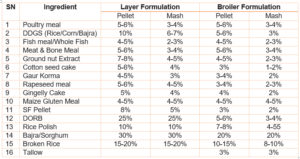
Alternate ingredients consideration in formulation:
Based on available alternate ingredients and cost feasibility, alternate ingredients can be used to some greater extent. Below is the list of alternate ingredients with maximum inclusion levels which can be used to optimize cost.
Role of QC when formulating with alternate ingredients:
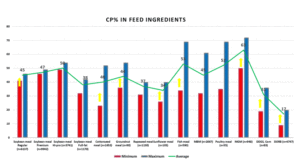
Quality control team plays a very crucial role when alternate ingredients are included in the formulation because the variation in terms of nutrient content (especially Crude protein) and adulteration are more in alternate ingredients when compared to Soya and Maize. With the current soaring prices of ingredients there are complains of lower protein levels in soymeal also. CP levels of Soya DOC claimed to be above 46% is now coming at 44 – 45%. For the feed to be commercially viable among the producer’s stringent QC for ingredient selection is the need of the hour.
Crude protein Levels in feed ingredients of South Asian region with minimum maximum and average values has been put in the graph to follow. Variation can be analyzed and then importance of QC can be made out.
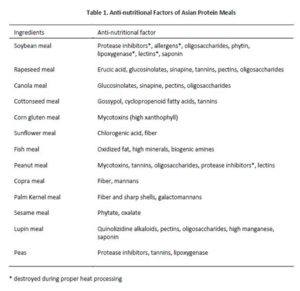
Digestibility of Ingredient and Anti-nutritional effects needs to be considered:
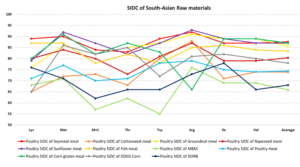
All formulation needs to be formulated on the basis of digestible amino acids. Commercial viability needs to be estimated on the basis of Digestible amino acid levels and not crude protein content of ingredients. Standard Coefficient of Illeal Digestibility (SIDC) is the factor being considered to calculate DAA levels. SIDC values has been developed and published by some companies and research institutes. But these levels have been estimated in temperate conditions in roosters/chicks through metabolic trials. Till we become “Atma Nirvar” for Indian SIDC values, we have no other options but to consider the data developed by the developed world.
When analyzing average digestibility of amino acids in ingredients, Soymeal, MGM, GNE and SF meal falls in highly digestible categories; Fish meal, Poultry meal, Rapeseed meal, DDGS, Cotton seed meal falls in average digestible categories; MBM and DORB falls in low digestible categories.
Similarly, there are many anti-nutritional factors present in the alternate ingredients which needs to be considered when these ingredients are included in the formulation beyond certain limit. Non-starch Polysaccharides (NSP) like Arabinoxylans, Beta-glucans, Mannans, Pectin, Cellulose also needs to be neutralized to avoid negative impact on performance.
Use of good enzymes including Protease is a must:
With the use of alternate ingredients, feed enzymes Xylanase, Amylase, Beta-Glucanase, Mannanase, Cellulase, Protease and Phytase have multiple roles to play. Some of the roles are
Reduces impact of variation in CP and DAA these alternative ingredients have
Neutralization of some anti-nutritional factors which impacts performance
Breakdown of insoluble / undigestible substrates to release nutrients
Reduces gut viscosity and balances microflora useful to gut
Reduces bacterial/protozoal migration to upper tract
Combination of NSP enzymes, Multi-Protease and Phytase can easily release 100-150 Kcal/kg ME and 5-8% Digestible Amino acid and considerable Ca, Av P, Na depending upon enzyme type and specificity. Multiple trials globally and in Indian conditions have proven it.
With the current raw material prices, reduction in 1-point DLys (Digestible Lysine when formulated based on Ideal Protein) and 20 Kcal/kg ME gives difference of ₹ 300/ton or ₹0.30/kg difference in formulation cost of feed. If this is the cost of enzymes you have been using, then that’s the break-even point. Even if we consider breakeven matrix, the requirement of summer formulation modulation (ME and DAA Increment) can be easily overcome by on top benefit of good enzyme blend.
The other way is to consider matrix for lowering down the feed cost. The more precise and confident we are in terms of raw material quality, finished feed specs the more realistic benefits we can feel with application of enzyme matrix.
For references, questions and feedback write to Novel Life Consultants, Bangalore. Email id is novellife.bangalore@gmail.comand contact no Landline 080-41326221 Mob- 9611337444)








 could be curbed or reduced. The sustained demand because of a spike in online sales and home delivery of chicken and eggs during the current phase of localised lockdowns is good indicators for the future growth of the poultry industry. Training of manpower (those engaged in online sales as well as wet markets who are carrying out home delivery of meat products) on food safety aspects would go a long way in sustaining the future growth of the poultry industry.






 For references, questions and feedback write to Novel Life Consultants, Bangalore. Email id is