Exploring the creative options with ‘time framed task’ that are within our control would be the assured keys for us to emerge as the winners with profitable poultry farming.

Such ignited thinking is ‘must & urgent’ during current pandemic situation and it’s inter-related scenes, ‘shuttling the market dynamics drastically.

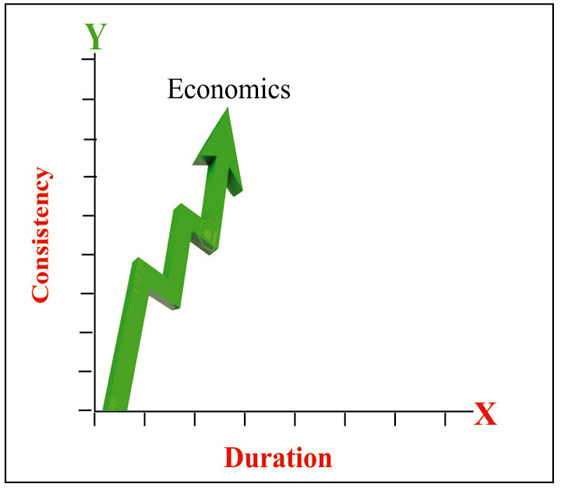
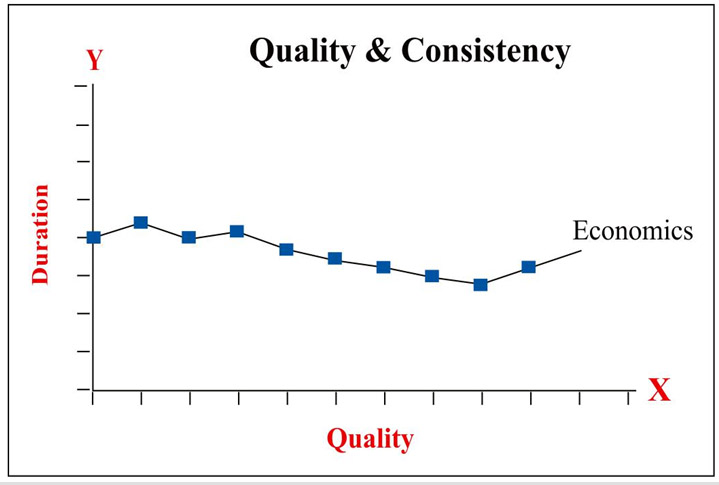
Consistency -A great ‘Y’ factor

Fig 1

Poultry industry’s today’s challenge is not just feeding the quality feed ingredients but ensuring to feed the birds with the similar quality ingredients with consistency.

Such consistent practices can help us scoring new heights in farm economics within short duration.

Less – nutritive feed supplements – Amazing BIOTECH tools

Grossly, we concentrate into making top class feed formulation with high quality feed ingredients for ensuring good numbered nutritional values.

In addition, if we equally look for biotech options as less-nutritive feed supplements’ with exploring attitude, many ways will be paved us for hassle free poultry farming.

Tiny tools yield huge benefits

Among the micro level ‘less-nutritive feed supplements’ like Trace Minerals, Amino Acids, Vitamins and Choline etc., It can be always given top priority to Vitamins, because of their important roles as ‘supplements’ start from the 1st hour of chicken till the end.

Feeding the birds’ the high quality vitamins consistently is vital as they have many complexed roles to play in the metabolic pathways of protein, carbohydrate and fat etc. and can ensure the farmer next level of farming.

Such habits are like a vision to look forward beyond horizons.

Yo-Yo birds

Today’s poultry birds are like 20-20 cricket match players in comparison to yesteryears’ classic match cricket players for fitness vs performance.

Yesteryears’ birds were challenged for performance; however today’s birds are to achieve the time framed tasks with performance underlined.

Hence, undoubtedly today’s birds need that extra nutrition by all means

Yesteryears’ luxury Vitamins are today’s essential & mandatory tools

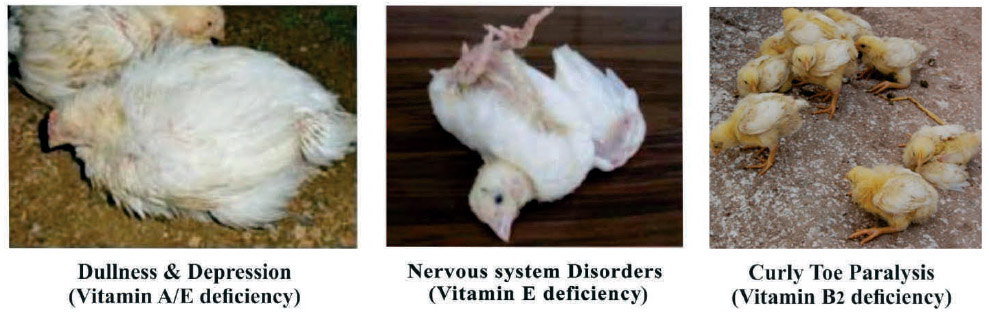
Bench marking yesteryear’s practice of adding/topping individual vitamins to the birds either as oral liquids or feed additives with today’s supplementing composite vitamin premix through feed is incomparable and so the signs or symptoms of the deficiency of vitamins. These days it’s very rare to find symptoms/signs of single vitamin deficiency in a poultry farm.

However it’s very common to notice the deficiencies of one or more (complexed and/or combination) vitamins especially stunted performance with unknown aetiologies.

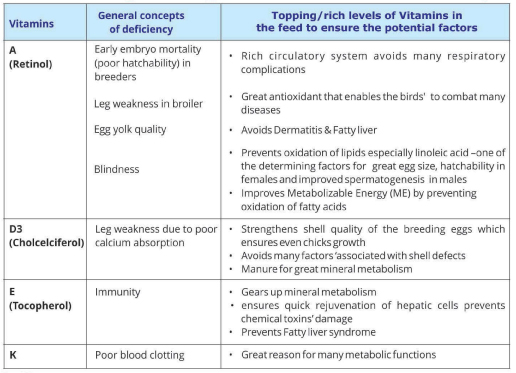
A brief review of general concepts with current scenario of vitamin deficiency

general concepts with current scenario of vitamin deficiency

general concepts with current scenario of vitamin deficiency

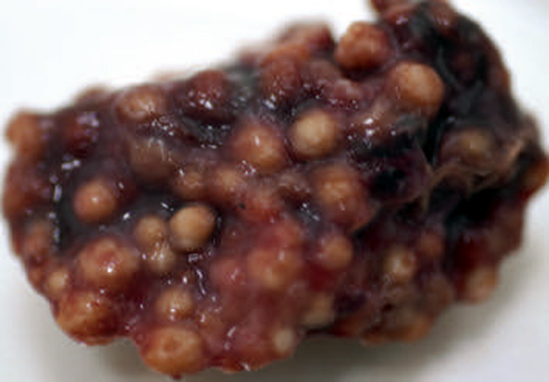
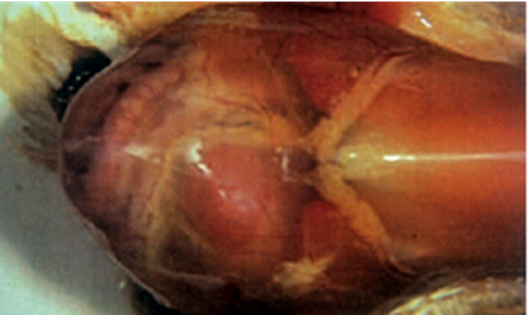
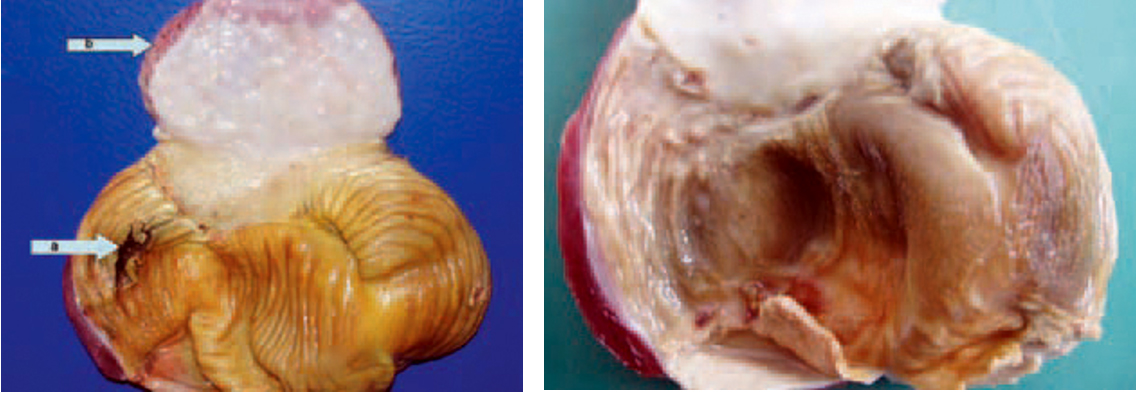
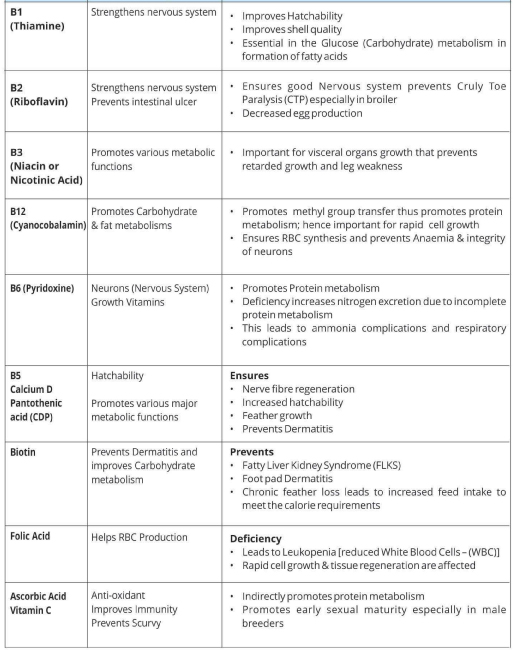
Few common Vitamin Deficiencies

Few common Vitamin Deficiencies

Vitamins’ inter-relationship

Vitamins have strong interrelationship in their metabolisms, which makes these wonderful composites’ unique and their bonding compliments one another as a composition.

This interrelationship of vitamins plays an important role during their metabolism which has been proven with many clinical studies.

Hence, a balanced composition of vitamins is more appropriate and valuable than counting the individual vitamins alone.

  • For an example Calcium D Pantothenic Acid (CDP) & Cyanocobalamin (B 12) have interrelationship in their metabolisms
  • Close relationship exists between B12 and Folic Acid.

Vitamin Antagonists

Intestinal absorption of micro-nutrients plays crucial role in chicken due to its short Gastro-Intestinal Tract (GIT).

Retarded, low quality Myco-Toxin binders present in the feed would play a ‘negative role’ in binding and destroying vitamins indirectly as ‘Vitamin Antagonists’ and directly by binding them in the GIT.

Many studies have proved that Sulpha drugs interact with vitamins and can play anti-vitamin roles in GIT

Hence, its equally important to use a good quality toxin binder to get the best results out of vitamins and try to avoid using sulpha drugs unless it’s very essential.

Quality – The X factor

Quality Factor

Supplementing quality vitamins with consistency certainly can accelerate the farm economics at a regular phase.

Conclusion

With the above current factors, the equation of vitamins in the poultry feed needs a fresh approach today and this write up can be concluded with the following points.

  • Less-nutritive micro-nutrients’ are great biotech tools for healthy farming
  • Composed vitamins the ‘less-nutritive micro-nutrients’ are more than feed supplements. They are great biotech tools for healthy farm economics
  • Composition and the combination of vitamins are more decisive factors than the numbers of one or other vitamins
  • Finally the ‘composite vitamins’ are more worthy and serious biotech tools than just glance them superficially as commodities of branded generics.

For more details, contact Dr. Ram Moorthy D., Email: rammoorthy.d@zagro.com, Phone: +91 97910 34754


Article by author: Soya Alternatives

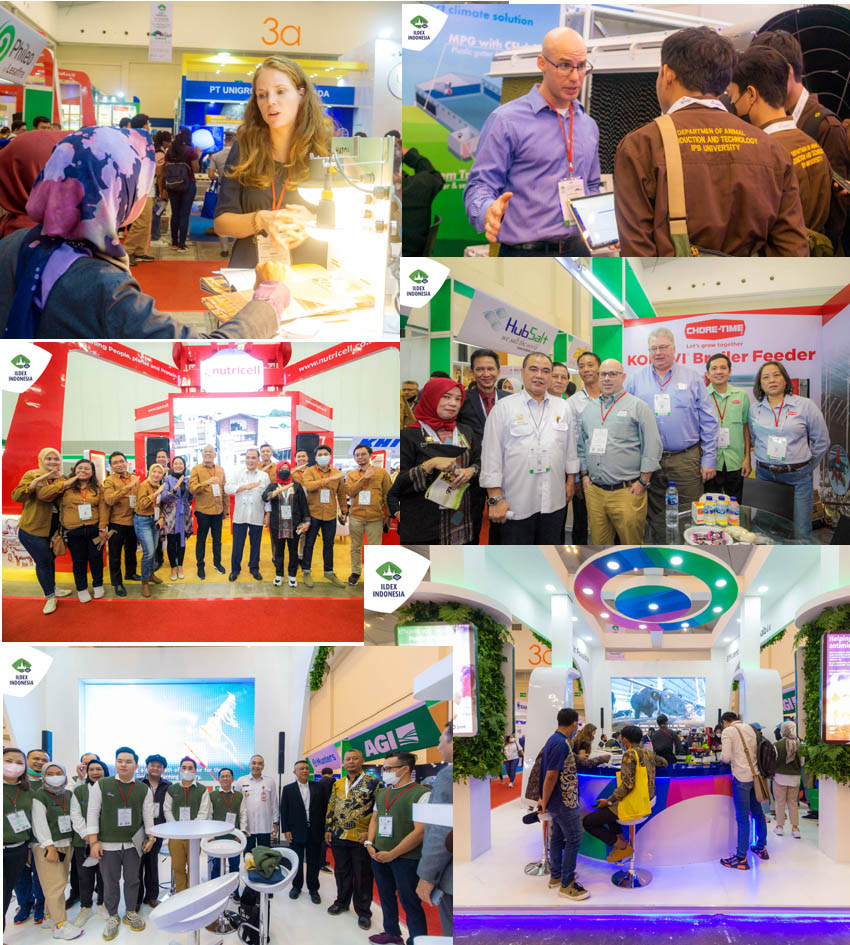
ILDEX Indonesia 2022 – The gateway to Indonesia’s livestock and aquaculture business is now open!

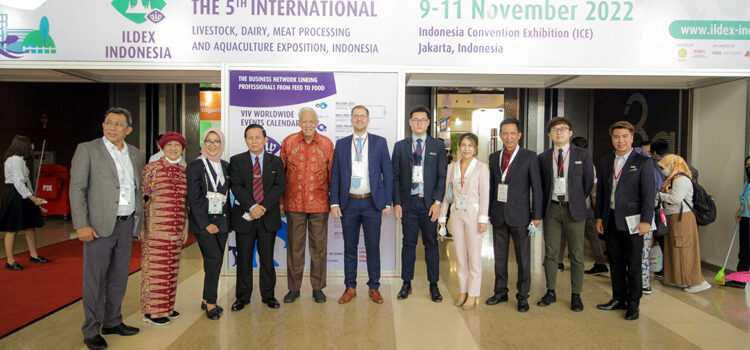
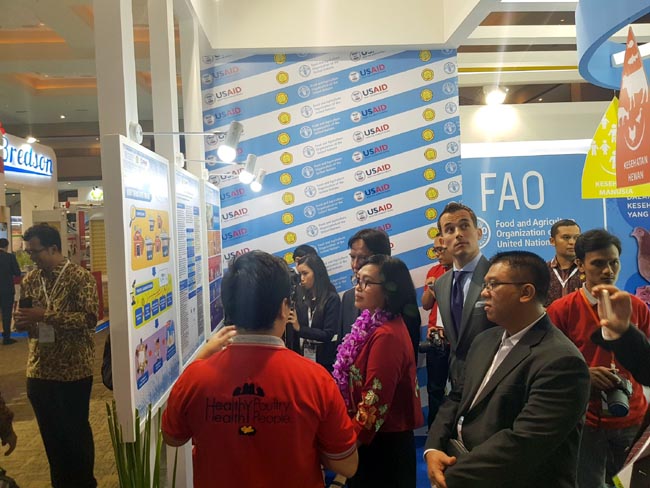
ILDEX Indonesia 2022 will be held on November 9, 2022, with an opening ceremony on the exhibition floor at the ICE in Jakarta. The opening speech will be given by Mr. Widianto Dwi Surya, President Director of PT. Permata Kreasi Media, Mr. Igor Palka, Managing Director of VNU Asia Pacific, Mr. Nasrullah, Directorate General of Livestock and Animal Health, the Ministry of Agriculture, RI, and Mr. Ahmad Zaki Iskandar, Regent of Tanggerang City.

ILDEX Indonesia 2022 opening ceremony

This year, ILDEX Indonesia marks the fifth edition of the trade exhibition for the livestock and aquaculture industries in the Indonesian market, neighboring countries, and also the Asia region, and is organized by VNU Asia Pacific and Permata Kreasi Media, the local partner. The show opens its doors from 9-11 November 2022 at Indonesia Convention Exhibition (ICE), Jakarta, Indonesia. At ILDEX Indonesia 2022, more than 135 companies from 25 countries will showcase their products and services, with over 55% being international companies from Asia, Europe, America, and South America.

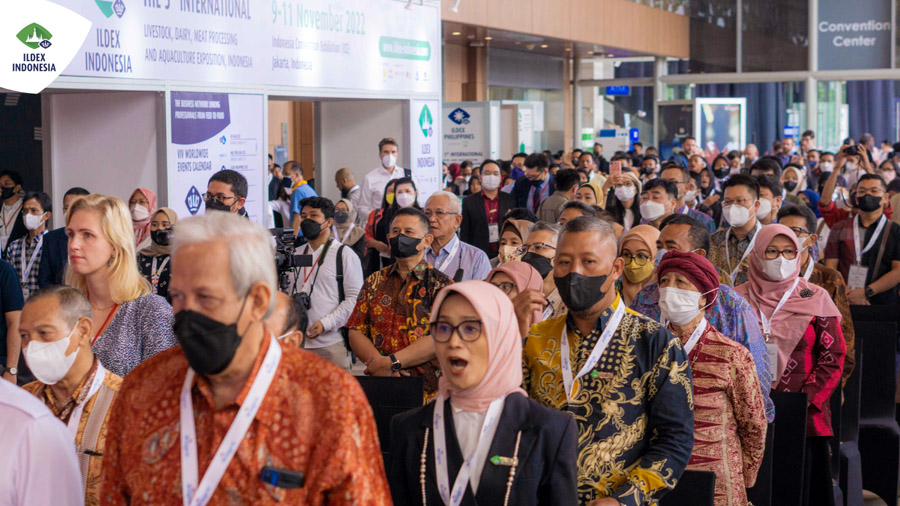
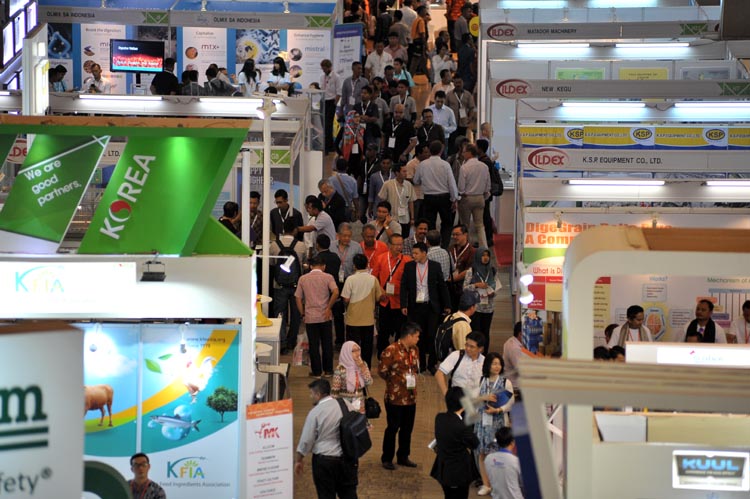
Visitors Day 1ILDEX Indonesia is organized to be an international trade exhibition covering many sectors, including pigs, poultry, dairy, eggs, farm management, and meat processing. The exhibition halls are divided into zones representing four main industrial sectors, Animal Health, Feed Ingredients/Additives, Farm Production, and Meat Processing/Handling bringing stakeholders, manufacturers, importers and exporters, and professionals. On the fairground, participants from Indonesia and overseas are discussing their business opportunities. The official opening event and the VIP tours are also crowded with industry professionals and buyers. Apart from that, the 50 conference sessions, presented by 71 international and national speakers and sessions are getting the interest of overseas and local audiences who will present various topics in English and Bahasa.

After being down for two years due to the pandemic and surviving, the excitement of ILDEX Indonesia 2022 gives a real substantiation that economic development in the livestock industry sector from any country has begun to stabilize and tend to develop. This year, ILDEX is targeted to be attended by more than 5,000+ livestock industry professionals from 30+ countries under the same roof.

Therefore, ILDEX Indonesia, with PT. Permata Kreasi Media, and VNU Asia Pacific Co., Ltd. really have high expectations that this event will be more successful in the coming year.

Be there and explore business opportunities together with the key stakeholders of the livestock industry in Indonesia.

ILDEX Indonesia 2022 opens its doors from 9-11 November 2022 at Indonesia Convention Exhibition (ICE), Jakarta, Indonesia. The opening hours are from 10:00 to 17:00 hrs. (Day 1-2) and 10:00 to-16:00 hrs. (Day 3)

Exhibitors at Ildex Indonesia 2022

“At ILDEX Indonesia, we execute and internationalize trade shows and conferences from animal production and processing to technology, from agriculture to innovations and from pets to medical and laboratory sectors. We apply its concepts and know-how across industries and in all Asian countries. Through our international network and global reach, we build and expand our marketplaces in Indonesia to meet the people’s demand, the country’s demand as well as a regional demand.” stated Mr. Igor Palka, Managing Director of VNU Asia Pacific in the Opening Ceremony of ILDEX Indonesia 2022.

For Online Registration Form, Click HERE

ILDEX Indonesia 2022 is ready to meet industry demand with high technology for livestock and aquaculture businesses this November!!

17 October 2022 – Jakarta, Indonesia: Local livestock management is essential work for the many Indonesians who are involved in the livestock trade from production to international trade . Furthermore, local investment in the livestock sub-sector (PMDN) in 2020 increased by 116.91%, while foreign investment (PMA) also saw a 17.64% increase compared to the previous year.

Ildex Indo Illustration 3Indonesia has a huge consumption of red meat, which is a traditional animal food source in Indonesia. The majority of the consumers of these foods are Muslim, which makes beef and chicken the most common meat proteins in Indonesia. Livestock production is increasing to meet the demand of domestic and international consumption. Consequently, importing from other countries and introducing high technology to manage production can be smart solutions to meet this demand. At ILDEX Indonesia 2022, more than 135 companies from 25 countries will showcase their products and services, with over 55% being international companies from Asia, Europe, America, and South America.

Ildex Indo Illustration 2This year, ILDEX Indonesia marks the fifth edition of the trade exhibition for the livestock and aquaculture industries in the Indonesia market, neighboring countries, and also the Asia region, and is organized by VNU Asia Pacific and Permata Kreasi Media, the local partner. ILDEX Indonesia is organised to be an international trade exhibition covering many sectors, including pigs, poultry, dairy, eggs, farm management, and meat processing. In addition, top domestic and international companies will be presenting their products to top buyers and industry professionals. Moreover, for over 20 years, the organizer has promoted the Indonesian market as a destination for international investors.

At ILDEX Indonesia 2019, the exhibition attracted 12,200 trade participants from 40 countries during the 3 days of the exhibition, with more than 200 potential local and international buyers. The top five groups of visitors were from poultry, animal health, agribusiness and, agrochemicals, feed mills, and import and export businesses.

Show Preview 5At ILDEX Indonesia 2022, our trade visitors will be able to meet new business partners, explore innovations and technology, attend seminars, and connect with livestock experts and leading brands to obtain a better market overview.

ILDEX Indonesia 2022 will be held from 9th – 11th November 2022 at the Indonesia Convention Exhibition (ICE), Jakarta, Indonesia. With strong support from the association and top companies worldwide, the organizers are confident that the exhibition will serve the region’s livestock and aquaculture industry needs.

Exhibition and Conference Highlights

Mr.Supanat Treeratpicharn, Project Manager of ILDEX Indonesia said, “At the 2022 edition, the visitors will meet 135+ leading brands from 30+ countries and three international pavilions representing the Netherlands, Europe and Aquatica. The exhibitor booths will be international brands (55%) Indonesian brands (35%) and associations, media, government and universities (10%). Maximize your business opportunities in Indonesia by meeting them all in one place. ILDEX Indonesia should be the next destination for your business.”

With 135+ international brands trade visitors can meet our exhibitors and make pre-meeting appointments via the VIV Connect Application. The top brands that are ready to meet you at ILDEX Indonesia include Aviagen, Jamesway Chick Master Incubator, Hendrix Genetix, deheus, Evonik, Jefo, DSM, Disseo, Boehringer Igelheim, Chore-Time, Munters, SKOV, Baaader, Marel, Foodmate, Moba, Sanovo and many more. In addition, there will be opportunities to connect with 8,000+ livestock industry professionals from 30+ countries under the same roof in over 4,860 sq. m. of exhibition space.

Apart for the exhibition area, the conference and seminar programs are the the other highlights of ILDEX Indonesia. We will provide 34 sessions with leading professional guest speakers to share their insights, knowledge and know-how, technical presentations on important topics such as breeding programs, animal health, medical challenges for poultry farmers and veterinarians, tackling antimicrobial resistance and more. The sessions will be conducted in Bahasa [the local language] and English. The technical conference program will be organized by leading companies such as Kubota, Jefo, Progressus, Munters, FCE, Aviagen, HY-LINE, JAPFA, Emtech, Farmsco Feed Indonesia, SKOV, Progressus, USLGE, FAVA-IVMA, Agromed, BEC Feed and FAO.

Ildex Indo Illustration 1Ms. Panadda Kongma, Director of Agribusiness and Operations said that “To make the show complete and to meet the expectations of our exhibitors, we will hold a ‘hosted buyer program’ with potential buyers from many countries in Asia. The total number is 40+ buyers, who are 60% local and 40% international. Many top buyers have already confirmed and are ready to visit our show, such as Charoen Pokphand Jaya Farm, Viya Crab Products Co.,Ltd., Ayamas Integrated Poultry Industry S/B, Green Hut Farming Sdn. Bhd., Cargill, PT. Great Giant, PT. Malindo, PT. Gold Coin Indonesia, PT. Sierad Produce, PT. Super Unggas Jaya and more onsite.”

Introducing the VIV CONNECT application by VIV worldwide

Starting with VIV Europe this May, the VIV Worldwide team has introduced a new application for livestock professionals worldwide ‘VIV CONNECT’, which can be downloaded. As ILDEX exhibitions are a part of the VIV worldwide show portfolio, all participants of ILDEX Indonesia can create their own digital profile once registration is complete. They can then create their own login password, update their photo and brand information, request business matching in advance, and customize their business appointments before the exhibition. In addition, they can connect with people from around the world and start a personal chat with them without any charge. Participants can also easily explore the exhibition floor plan and exhibition list and check the conference program on their mobile phones.

Save the date: ILDEX Indonesia 2022 opens its doors from 9-11 November 2022 at Indonesia Convention Exhibition (ICE), Jakarta, Indonesia.

Opening hours:

  • Day 1: 10:00 to 17:00 hrs. 
  • Day 2: 10:00 to 17:00 hrs.
  • Day 3: 10:00 to-16:00 hrs. 

Avoid the rush at the exhibition and save your time by clicking HERE >> 

ILDEX Indonesia 2022

Website:  www.ildex-indonesia.com

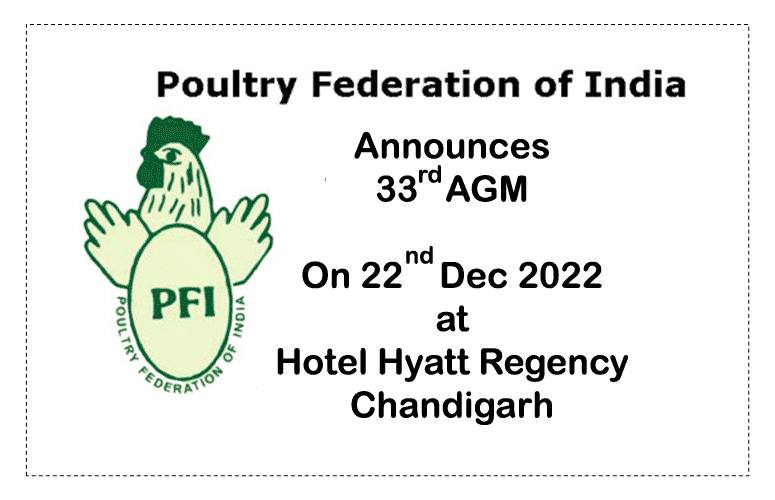
Poultry Federation of India (PFI), an apex and renowned association of Poultry Farmers, Breeders, Equipment Manufacturers, Pharmaceutical Companies and all allied Industries, is organizing its 33rd Annual General Body Meeting (AGM) at Hotel Hyatt Regency Chandigarh on Thursday December 22, 2022.

Delegates Registration Fee

  • Until November 15, 2022              – Rs.3,000 per person
  • On Spot Registration (at Venue) – Rs.4,000 per person

Registration fees includes Lunch, High Tea, Cocktail, Networking Dinner and attending Musical Entertainment Program on December 22, 2022.

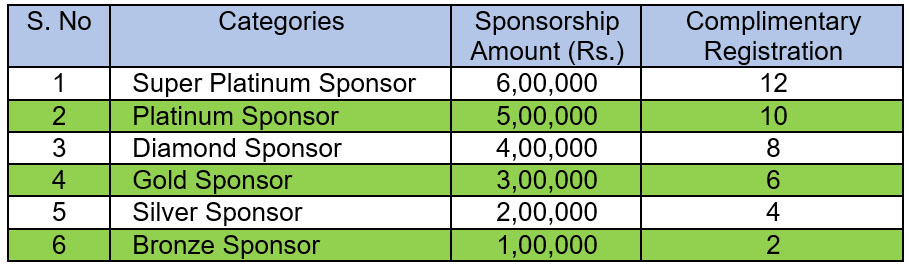
Sponsorship Opportunities: Six categories

PFI 2022 sponsorship
Sponsorship Options

The Sponsor companies can display their advertisements in form of standees/ banners on the prominent locations inside the conference hall. Table space will also be provided to the sponsors near the hall entrance. The logos of all the sponsors shall be printed on PFI Invitation cards, welcome banners, main backdrop banner and on all PFI promotional banners. All sponsoring companies will be honoured by presenting them mementos during the AGM.

Kindly send the sponsorship confirmation by sending the cheque / draft in the name of Poultry Federation of India. Your support by giving Sponsorships in Poultry Federation of India’s 33rd AGM shall be highly appreciated.

Hotel accommodation:
PFI has blocked 90 Rooms at Hyatt Regency, Chandigarh at a special price of Rs. 8500 + 18 % GST until 15 November 2022.

All are requested to kindly confirm room requirement before 15 November, 2022. A final rooming list will be submitted with the hotel by 5 pm on 15 November, 2022. No requests or amendments will be entertained pertaining to rooms reservation list thereafter.

For any further information, clarification, feel free to contact us.

Regards,
On behalf of Sh. Ranpal Dhanda, President
Poultry Federation of India
Address: 49, First Floor, Omaxe Plaza, Omaxe City, G.T Karnal Road, Sonepat, Haryana (131001)
Office: +91 85752 22224  Direct: +91 9215700133   Email: info@poultryfederation.org

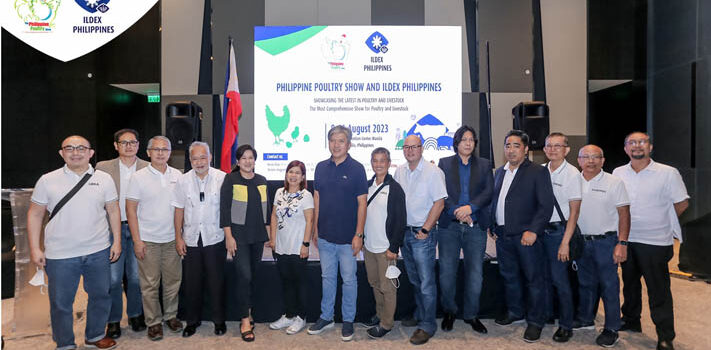
VNU Asia Pacific, the organizer of ILDEX Exhibitions, is entering the Philippines. After organising ILDEX Vietnam and ILDEX Indonesia for nearly 20 years, VNU Asia Pacific announces a new show “ILDEX Philippines” in co-location with “the Philippines Poultry Show” scheduled from 9-11 August 2023 at SMX Convention Center Manila, Philippines.

The Philippines is one of the fastest-growing emerging markets, and the 3rd largest economy in Southeast Asia by nominal GDP, following Thailand and Indonesia. The Philippines is primarily considered a newly industrialized country, with an economy transitioning from one based on agriculture to one based more on services and manufacturing.

In 2021, the value of production in the livestock industry in the Philippines amounted to approximately 252.11 billion Philippine pesos, which was a decrease compared to the previous year’s total. On the other hand, a bright future for the Philippines poultry industry is indicated by a 4% increase in chicken egg output in 2020 compared to the previous year – from 583,234 MT to 605,78 MT. The country’s chicken layer population expanded by 4.19% from 41.202 million birds to 42.928 million. Consequently, the Philippines livestock market also has great potential for growth, and the exhibition is a chance to expand business opportunities in this country.

VNU opens a new gateway to reach the Philippines market

VNU Asia Pacific will join forces with Deltaman“VNU Asia Pacific held the initial investor meetings project in 2019 in Manila, but due to the pandemic, the development of the project was slowed. ILDEX Philippines 2023 will reflect the market’s high levels of demand and opportunities for the players entering the market, and ILDEX Philippines will be part of the VIV worldwide portfolio” said Ms.Panadda Kongma, Director of Agribusiness and Operations, VNU Asia Pacific.

“ILDEX has had great success in Vietnam and Indonesia over the past 20 years. In 2023, we are super excited to bring the ILDEX brand to a new destination, the Philippines, a dynamic market with great potential for the livestock industry. Our partner, the Philippines Poultry Show, already had established a solid base in the poultry sector over the past 10 years, and ILDEX will be adding more elements including swine, dairy, aquaculture etc. to this platform. We look forward to a successful partnership with the Philippines Poultry Show.” Mr. Kevin Zhao Bo, Project Manager of ILDEX Vietnam & Philippines, VNU Asia Pacific added.

Deltaman kicks off the Philippines Poultry Show alongside ILDEX Philippines

Over the years, the Philippines Poultry Show has not only grown bigger in size, but is also becoming even better in terms of features and exhibits. So much so that it has become a much-awaited event for poultry industry stockholders, exhibitors and the general public.

The LaunchTogether with our new partner VNU Asia Pacific, we promise a world-class trade show & exhibition.

The Philippines Poultry show in co-location with the 1st edition of ILDEX Philippines 2023 will be held from 9-11 August 2023 at the SMX Convention Center Manila, Philippines, organized by Delta Man and VNU Asia Pacific.

For more information and exhibiting rates, please contact Mr. Kevin Zhao [Project Manager of ILDEX Philippines] at kevin@vnuasiapacific.com and Mylene Magpantay [Project manager, the Philippines Poultry Show] at poultryshowandidex@gmail.com

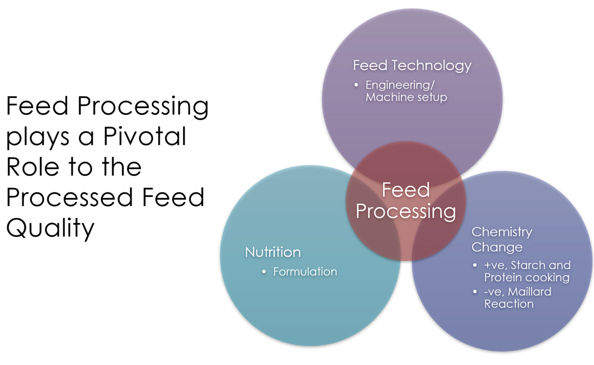
The performance of commercial broilers not only depends on a balanced nutritional diet, but also is greatly influenced by form of feed. It is found that pellet feed significantly influences the performance of the flock .
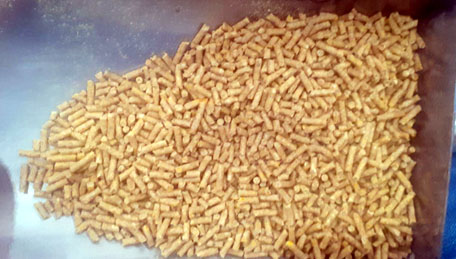
Feed pellet

Feed form comprises two distinct elements,

  • the microstructure, that describes the particle size and uniformity, and
  • the macrostructure that describes pellet size, hardness, and quality.

These two factors are linked as all feeds are first reduced to particles (mash) before being pelleted. Feed is the link factor between formulator(nutritionist) and farm. So, not only nutritional value is important but also delivery of those nutrients through quality feed is equally important.

The good quality of pellet starts from good grinding

Grinding the feed ingredients into finer particles is a key factor to start quality pellet manufacturing. Particle size should be so fine that it may impact digestibility of feed. The geometric mean diameter (GMD) of the fine particles is always equal to or lower than that of mash feed, and these particles may cause a nutritional imbalance in feed chemical composition, which may negatively affect the bird performance (Muramatsu et al., 2015).Small particle size of feed causes gizzard atrophy and intestinal hypertrophy caused by bacterial fermentation

When particles are large, breakdown of feed particles at the proximal small intestine will be slower. Gizzard is the pacemaker of the GI tract. When finer feed is given, gizzard acts as a transit rather than a grinding organ. Less retention in gizzard leads to less exposures to proventriculus enzymes. It is found that a finely ground diet (560μm) compromised nutritional metabolism as particle size affects ME, nitrogen retention and DM retention. If the particle size is small ( 800 micron) feed intake is significantly reduced. On an average, a reduction of mean particle size of 100 micron will lead to a decreased feed intake of 4%.

If the feed particles are too coarse, it makes it difficult to mix a homogenous diet and feed selection. The best performance is obtained with the medium size particles 1.13 mm to 1.23 mm. It is true that a more coarsely ground maize leads to improved nutrient utilization by the birds and this remains the case when after pelleting, although the pellet press will regrind many of the larger particles. Roller mill tends to produce particles evenly distributed across a weight range, whereas a hammer mill tends to produce a greater proportion of fines and coarse particles.

Diet particle size positively influences the performance and organ and tissue growth of 21-72-day old broilers (Maiorka et al., 1998). Feed wastage tends to be higher when mash feeds are fed. In addition, the bird covers each with mucin before swallowing, which needs both protein and energy.

Nowadays most of the broiler feeds are fed in pelleted form. Injecting steam into the feed during conditioning and subsequent pressing through pellet die improves pellet durability. Pelleting is defined as the agglomeration of smaller particles into larger particles through a mechanical process combining moisture (through steam), heat, and pressure. (Abdollahi et al.,2013)

Why Pellet feed so good for commercial broiler chicken ?

It is now well-established commercial activity to manufacture and offer pellet feed in commercial broilers because of following reasons:

  • Feed homogeneity is improved because feed separation is greatly reduced
  • Less feed is wasted when pellets are fed
  • Pelleting should slightly improve the energy value through the chemical changes brought about by heat moisture and pressure
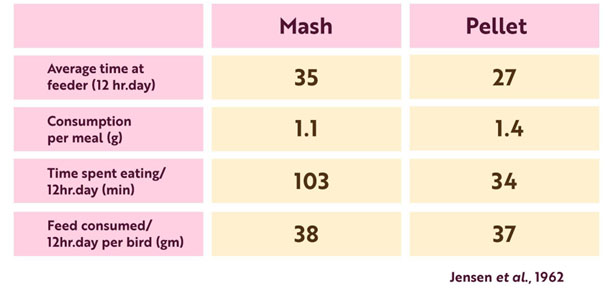
  • Much of the improvement is measured energy value of pellets results from the fact that birds spend less time eating them and so their energy requirement for eating and digestion is reduced. Although pellet size may play a role in feed intake.
    ❖ Lilly et al. (2011) found for every 10-percentage-point increase in whole pellets there was a 0.4-point improvement in FCR and breast weight, while increasing FI
    ❖ Glover et al. (2016) found broilers fed a high pellet quality (90:10 pellet: fine) diet achieved a low FCR and high carcass weight, indicating production savings relative to a ground pellet diet of $0.05 to $0.03/kg of carcass weight

The Best suitable methods for measuring pellet quality

Apart from proximate values of feed ingredients, some other physical qualities like abrasiveness, pellet quality factor, color and density impact on pellet quality and durability. Pellet quality factor (PQF) has a score from 0 to 10 where o predicts poor quality and 10 indicates good pellet binding quality. Abrasiveness factor of the ingredient is just opposite to the pellet quality factor. Lower the factor value higher is the binding capacity.

Young (1962) used the technique consisting of an inclined screw, a hopper, and bucket elevator conveyor to measure pellet durability. 23 kg of pellets were continuously passed through this system for a period of 10 min. At the end of the test, the pellets were separated and the fines were removed. Calculation of the Pellet Durability Index (PDI) was percentage of the mass of surviving pellets over the total mass of pellets.

Several laboratory methods developed different technique to measure the durability of pellets like:

Tumbling box method: Commonly used method and a recognized standard in the feed industry in North America(Winowiski, 1998). The tumbling box technique uses 500 g of pellets, from which the fines have been separated. The pellets are placed in a box that revolves for the time frame of 10 min at a speed of 100 rpm. After this process, the pellets are screened on a mechanical sieve shaker. The PDI is calculated as the weight of the pellets retained on the screen divided by the total weight of pellets. (ASAE Standards, 2003)

Holmen durability tester: It is a pneumatic method of measuring the durability of the pellets. A sample size of 100 g of pellets is placed through tubes with high velocity air for 30 to 120 s, replicating the handling process. Breakage occurs when pellets strike the right-angle corners of the tester. The PDI is calculated as the weight of the pellets retained on the screen divided by the total weight of pellets. (ASAE Standards, 2003)

The Stokes hardness tester: The tester comprises a calibrated spring, a cone with a tip, and a plate supporting the opposite side of the cone. The cone tip applies pressure on the cylindrical surface of the pellet during testing. Pressure is controlled by a screw turned by hand to compress the spring. Only 10 pellets are placed in the tester, and pellet hardness is expressed in psi (Young, 1962).

Three major factors responsible for good quality of pellet feed:

Formulation: Formulation plays a vital role in pellet quality but it is not the only factor. Ingredient composition like moisture percentage, fat percentage, protein percentage, starch content are important nutritional factors to be considered for good quality pellet production. Corn-soya diet is considered as the best formulation for getting better pellet quality. Dietary inclusion of 10-15% of wheat or wheat middlings or addition of as little as 5% sunflower oilcake will result in good quality pellets. It is found that addition of 1% oil in diet reduces pellet durability by 8-10%. Each 10% increase in fines is equal to about 0.016 kcal per kg reduction in energy. Moritz et al. (2002) stated that addition of two oils at graded levels (30 g/kg and 65 g/kg) in broiler diets and observed that PDI decreased from 81.6% to 62.1% with the highest oil inclusion.
Adding pellet binder in diet improves binding capacity and durability of pellet. There are several available options like synthetic polymer-based binder, natural resin-based binder, lignosulphonate and bentonite. But selection of best binder is very critical and should be based on higher pellet quality factor and mode of binding. Synthetic resin has pellet quality factor 40 and can irreversibly bind at high pellet temperature and conditioning moisture.
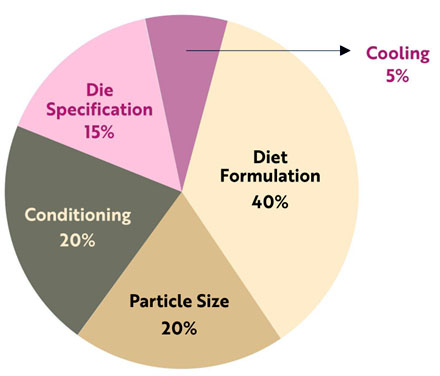
Processing equipment: Quality and die capacity are important for good quality pellet. Compression length and diameter of the compression hole are important factors for deciding the pellet quality. If thickness of the die increases, then pellet durability will improve but inversely throughput of pellet will decrease. So, trading off these two factors are very important. Similarly die set up, cooler set up and screen set up are deciding factors for good quality pellets.

Processing standard: As discussed earlier, grinding and pulverization during milling is another deciding factor for good quality pellets. In commercial broilers below 300-micron particle size during grinding helps in better gelatinization during conditioning resulting in a good durable pellet. Similarly standardizing the conditioning parameters like temperature, moisture percentage, steam injection and steam pressure, retention time are equally important. Briggs et al. (1999) stated that increasing retention time frame from 5 s to 15 s increased pellet durability by 4.5%.

Conclusion:

During processing, reduction of particle size is a significant influencing factor for better pellet quality and positively influences the performance of the birds. Formulation especially in terms of inclusion of certain feed ingredients are to be considered judiciously. Similarly standardization of processing equipment and process flow are equally important for pellet quality consistency.

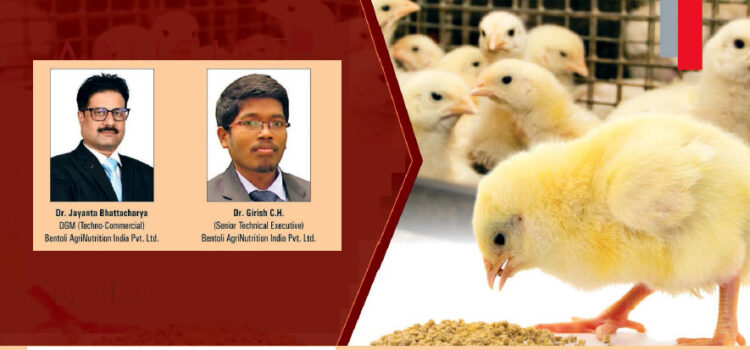
Authors: Dr.Jayanta Bhattacharya- DGM(Techno Commercial) and Dr. Girish. C.H (Senior Technical Executive)
Bentoli AgriNutrition India Pvt., Ltd.

Reference: 
❖ Abdollahi, M.R., Ravindran, V. and Svihus, B., 2013. Pelleting of broiler diets: An overview with emphasis on pellet quality and nutritional value. Animal feed science and technology, 179(1-4), pp.1-23.
❖ ASAE Standards. 2003. S269.4: Cubes, pellets, and crumbles – definitions and methods for determining density, durability and moisture content. St. Joseph, MI: ASABE. 
❖ Briggs, J. L., Maier, D. E., Wakins, B. A., and Behnke, K. C. 1999. “Effect of Ingredients and Processing Parameters on Pellet Quality.” Poultry Science 78: 1464-71
❖ Glover, B.G., Foltz, K.L., Holásková, I. and Moritz, J.S., 2016. Effects of modest improvements in pellet quality and experiment pen size on broiler chicken performance. Journal of Applied Poultry Research, 25(1), pp.21-28.
❖ Jensen, L.S., Merrill, L.H., Reddy, C.V. and McGinnis, J., 1962. Observations on eating patterns and rate of food passage of birds fed pelleted and unpelleted diets. Poultry Science, 41(5), pp.1414-1419.
❖ Lilly, K.G.S., Gehring, C.K., Beaman, K.R., Turk, P.J., Sperow, M. and Moritz, J.S., 2011. Examining the relationships between pellet quality, broiler performance, and bird sex. Journal of Applied Poultry Research, 20(2), pp.231-239.
❖ Maiorka, A., Magro, N., Bartels, H.A. and Penz Jr, A.M., 1998. Effect of sodium level and different relations between sodium, potassium and chloride in pre-initial diets on broiler chicken performance. Anais da XXXV Reuniao Annu. Soc. Bras. Zootec., SBZ, Botucatu, SP, Brazil, pp.478-480.
❖ Moritz, J.S., Wilson, K.J., Cramer, K.R., Beyer, R.S., McKinney, L.J., Cavalcanti, W.B. and Mo, X., 2002. Effect of formulation density, moisture, and surfactant on feed manufacturing, pellet quality, and broiler performance. Journal of Applied Poultry Research, 11(2), pp.155-163.
❖ Muramatsu, K., Massuquetto, A., Dahlke, F. and Maiorka, A., 2015. Factors that affect pellet quality: a review. Journal of Agricultural Science and Technology, 9(2), pp.717-722.
❖ Young, L.R. 1962. Mechanical durability of feed pellets. Unpublished MS thesis, Manhattan, Kansas: Kansas State University, Department of Grain Science and Industry.


High-quality protein plays a critical role in global food security. “Soybeans feed our need for protein and essential fats, as well as micro and macronutrients” says Will McNair, director of oil and soy food programs and deputy director of Northeast asia for U.S. Soybean Export Council (USSEC).

Author Pic
Author: Dr. Pankaj Kr. Singh
Techno-commercial Advisor / LiveStock Consultant
M: +91.78380 59957
 drpankajnatural@gmail.com


The Organic Soybean meal is most important protein source used in livestock feeds. It also provides metabolizable energy to live stock. It represents about two-thirds of the total world output of protein feedstuffs, including all other major oil meals and fish meals.

It is produced from the residue left after oil extraction of Soybean. Soybean meal has a high protein content in it, especially when compared to other plant-based protein. The protein obtained from Soybean meal is the number one protein used in the poultry and livestock industries in the world.

Organic Soybean and Soybean meal have unique nutritional properties that make livestock healthier. It is recommended to use Non-GMO (Non genetically modified) Soybean meal for the livestock.

The problem which farm owners face is that they have to process the Organic Soybean and convert it into a Soybean meal prior to feeding the livestock.

As we know that Organic Soybean is a member of the legume family of plants. If the beans are used, they must be roasted or steamed to destroy the anti-nutritional factors especially trypsin inhibitors.

Organic Soybean meal contains a beneficial component for livestock. Soybean meal is known for its crude protein but when we make the Soybean to crude protein it is based on amino acids those are the building blocks of proteins.

The Soybean meal is protein-rich have the highest digestible amino acids beneficial for livestock. The amino acids present in the Soybean meal help livestock for better growth and production. According to Experts, livestock doesn’t need protein, they need digestible amino acids.

For more details, contact Dr. Pankaj Kr. Singh at M: +9178380-59957 ,  drpankajnatural@gmail.com; 

Mycotoxin is hidden enemy for poultry farming. Mycotoxin become worldwide problem due to high incidence and level of occurrence in animal feed. Increase in feed cost has just aggravated this problem. Mycotoxin have high potential risk to public health as well. According to the FAO approximately 25% of the world’s agricultural products is contaminated with mycotoxins, and this contamination maybe due to saprophytic fungi before harvest of these crops while they are still in the field, during the process of harvest, and even after harvest during the storage of these.

Authors
(Authors)

The most common poultry feed ingredients contaminated by mycotoxins include – Maize, Wheat and wheat by-products and Soybean meal. Storage condition of grains and environment factors are major factors for development of mycotoxicosis. Aflatoxins (AF), zearalenone (ZEN), ochratoxin A (OTA), fumonisin (FUM), trichothecenes such as deoxynivalenol (DON), and T-2 toxin are some of the mycotoxins that can significantly impact the health and productivity of poultry. In general, contaminated feeds usually contain more than one mycotoxin.

Extreme weather conditions, heavy rain and drought lead to plant stress making them more susceptible to fungal infections. Mycotoxins are small and stable metabolites produced by fungi which can contaminate a wide variety of crops. The contamination of food and feed by mycotoxins is a global safety issue due to their adverse effects on human and animal health.

In livestock & poultry, mycotoxins lead to important decreases in performance (growth, feed efficiency or reproduction issues) and consequently losses of revenue for farmers. common effects mycotoxin in poultry are reduced feed intake, poor weight gain, poor feed efficiency, poor growth performance, immunosuppression and poor hatchability along with increased mortality.

Mycotoxins vary in their chemical structures, which results in vast differences regarding their chemical, physical, and biochemical properties. While considering the great variety of mycotoxin structures there is no single method, which can be used to deactivate mycotoxins in feed. Therefore, different strategies have to be combined in order to specifically target individual mycotoxins without impacting the quality of feed. The best-known method for mycotoxin deactivation is “binding” with the use of binding agents, which are referred to as mycotoxin binders, adsorbents.

Prevention and Control of toxin in feed by

Being an industry pioneer, GLOCREST & its peers, has more than half a century of combined expertise in the development and manufacturing of nutrition products – developed broad spectrum economical toxin binder –  . It counteracts mycotoxins in three ways –

By silicate binding, Mycotoxin destruction and by Liver protection.

contains – MOS, PVPP, Copper oxime, Choline chloride and Sodium butyrate, Humic acid, Activated charcoal and HSCAS. It binds polar and non-Polar mycotoxins e.g., Aflatoxins, ochratoxins, Ergot poisoning, Deoxynivalenol, zearalenone, T2 toxin, Fumonisin, etc. is safe and efficient and economical toxin binder.

Role of Humic Acid in  – It helps to stabilise the intestinal microflora to helps nutrients absorption. It acts as antibiotic like substance as alternative to growth promotor. It is one of most safe organic acids. It has unique action to bind moulds and fungus outside body as well as when feed is under storage. It acts as synergistic with other essential nutrients.

Ps: Some Images and information from internet

Source: GLOCREST Pharmaceutical Pvt. Ltd.


Related Company News: Grand Opening: GLOCREST Pharmaceutical Pvt Ltd Corporate Office @ Mumbai

All this while the focus of the animal protein industry has been to ‘produce food’. The when, where and how of it weren’t discussion points. The industry, has taken its time to acknowledge the changing considerations of the end user- the consumer.

ABTL LogoThe end consumers have benefitted from the consistent growth in productivity and efficiency of animal protein production, choosing to spend their disposable income on purchase of meat and its derivatives. The consumer is also ‘aware’ and ‘conscious’ of what’s happening around the world. How food choices and preferences are changing, what considerations are driving that change, so on and so forth. Slowly but certainly it was bound to influence how the Indian consumer viewed animal protein.

This has been long coming: the industry- producers, processors and marketers of animal protein, is at an inflection point where it is compelled to think beyond productivity and efficiency. And that ‘beyond’ is understanding the shift in cultural and market expectations for animal protein. There is a lot of lost ground to cover.

Consumer priorities: globally have undergone an important shift. During Covid many lost means to livelihood, others faced uncertainty about income and illness. In this period of heightened anxiety, post COVID, feeding their families and keeping them healthy are a higher priority. Instead of being concerned about what’s in the environment that might harm the planet, the concern today revolves more around what’s in the environment that might harm me or my family. Its definitely a step down from concerns associated with sustainability and so on and looking more towards survival and self preservation.

Affordable, Healthy Nutrition: Consumers are counting on food industry innovation to provide affordable, healthy options with an eye toward immunity and how processed foods can play a new role. They are also re-thinking their opposition to “processed foods” if there is a nutritional benefit to the processing. Fortifying processed foods with vitamins and minerals may now be back in vogue as consumers look for more opportunities to enhance immune health. This is a clear win for the protein sector.

Plant based protein
Image Source: ABTL

Alternative Proteins: Plant protein is evolving – it is giving meat eaters an alternative to feeling guilty about the health and environmental impacts of animal protein by providing a passable alternative that is perceived to be “better for me” and “better for the planet”. ‘Veg meat’ options in India from producers like Greenbird, Blue Tribe, Good Dot etc are slow making inroads.

However, the initial perception of ‘better for me’ is now being questioned by a growing awareness that most plant-based meat alternatives are highly processed with a long list of ingredients, not to mention the added sugar. This provides an opening for animal protein producers to spotlight its nutritional attributes while continuing to innovate as well as to highlight clean labels and nutritionally dense protein.

Engagement with Gen Z & digitised information delivery: Gen Z generation of consumers embraces technology, expects innovation and demands engagement. Direct to consumer ( DTC) processed food producers have a definite advantage where they can use consumer feedback to continuously improve product formulations. Giving people an impression that their voice is being heard , gives them a new reason to try a product again, even if they didn’t like it the first time. This model – digital feedback loop for ongoing product innovation will create an opportunity for animal protein companies to improve their engagement and products.

Eggs
Image Source: Freepik

Online shopping: COVID-19 is a pivot point for consumers that marks the shift of in-person supermarket shopping as the dominant retail channel to consumers buying food and meat online. Research shows consumers now spend 30 minutes or less on preparation, rely more on online shopping with delivery and/or pick-up. Technology is food shopping is here to stay. This is an opportunity for the animal protein sector to meet (or create) unmet needs through innovation. Is animal protein center of the plate, a meal stretcher or a snack? The answer is yes to all three and more. The real question is, which animal protein companies will be innovative enough to capture this opportunity.

As food producers, a key area is communication with the end consumer. And that will be possible only if there is an understanding of where the consumer is coming from.

Fresh and High Quality: Aware consumers, from their research and reading have formed a belief that the fat profile and vitamin content of organic, grass-fed or free-range products are better, hence the demand for organic eggs and dairy from grass-fed cows. They are also willing to pay a premium for this.

Ethically-Raised Animals: Consumers are concerned about how the animals are being raised at farm level. They are vocal about their expectation of improved welfare standards for food producing animals.

Plant Based protein
Image Source: ABTL

Plant-Based Alternative Proteins: Even in the case of consumers looking to reduce meat consumption, they have conflicting feelings about plant-based proteins. For one, its taste and another, the high level of processing involved in manufacturing of plant based protein.

Food producers need to actively work to meet consumer expectations with products that give consumers the animal protein they crave, give them assurances that they’re making the right decisions for themselves and their families – that they’re providing high quality, affordable protein produced in an ethical manner.

Communication is key: Food producers need to deliver a message to the consumers. For e.g. leverage “locally grown” so on and so forth. Animal protein production has to become more consumer-centric by taking feedback, and factoring it in product development will bring them closer to the consumer.

Food labels should contain information that talks about the measures food producers adopt to ensure animal well-being, environmental impact and other issues that could drive animal protein consumers to alternatives.

Essential Nutrients and Health: Egg is the cheapest protein and as such accessible to all for desired nutrient delivery. Role of animal protein in in immune health has to be highlighted to drive home the point.

Engage Emerging Audiences: Develop a specific Gen Z strategy.

COVID-19 has shaped consumer attitudes regarding their food and how it’s produced, shaping the future of animal protein. Consumers are clearly in the driver’s seat and following their lead provides the food system with the best chance for long-term success as consumers adopt new – and perhaps long-lasting – behaviour.

Source: ABTL

Hanoi, 14 September 2022, SES Vietnam Exhibition Services Company – a subsidiary of Informa Markets held a Press Conference and officially announced the return of Vietstock Expo & Forum 2022 – Vietnam’s Premier International Feed, Livestock & Meat Industry, expects to be the biggest show in Vietnam & neighboring countries covering the total latest solutions for Feed, Livestock, and Meat processing sectors in 2022.

Hosted by Livestock Production Department, Ministry of Agriculture and Rural Development (MARD), the exhibition will take place in Ho Chi Minh City, Vietnam, from 12 – 14 October 2022, at Saigon Exhibition & Convention Center – SECC, District 7.

Media at Press Conference

Held in conjunction with Vietfeed & Vietmeat, the exhibition is where the industry professionals involved in the farm-to-fork value chain for livestock products meet up and form a huge community from which to share and create new business opportunities, partnerships, ideas, and solutions. The practical synergies of these 3 combined exhibitions provide a unique one-stop show to bring together all feed, livestock, and meat sectors, representing the entire animal protein value chain from production to consumption.

Vietstock Expo & Forum 2022 expects to attract more than 150 exhibiting companies from 21 countries and regions including Argentina, Australia, Canada, China, Denmark, France, Germany, India, Italy, Japan, Korea, Malaysia, Mexico, Netherlands, Singapore, Switzerland, Thailand, Taiwan, Turkey, USA, Vietnam, and well-known brands like Famsun, Big Herdsman, Pigtek, Big Dutchman, De Heus, Schippers Group, Thuan Nhat Automation, Provimi, Peja, Buhler, Miavit, Stolz Asia, Amandus, Pericoli, CPM, Nabel Asia, and many more …

During the three days of exhibition, there will be featured activities and events going on such as the Conference & Technical seminar programs to provide visitors & buyers with various industry knowledge and latest market insights. Beyond that, the exclusive Business matching program is offered complimentary for the exhibitors and buyers to meet and trade at the show. Vietstock Expo & Forum 2022 will be the perfect business platform not only for showcasing the latest technologies & products but also for great face-to-face business meetings, learning & updating new industry knowledge.

Vietstock Awards 2022 which is held alongside with Vietstock Expo & Forum 2022, is the prestigious Livestock awards hosted and approved by the Livestock Production Department, Ministry of Agriculture and Rural Development (MARD) to honor all enterprises, organizations as well as cooperatives that have made positive and meaningful contributions to the overall development of Vietnam’s livestock industry.

This year at Vietstock Expo & Forum 2022, for the first time, Waste-to-Energy Pavilion, launched at the show, is a new feature with the emphasize of Biogas & Biomass technologies applying into Farming & Livestock Production sectors, aligning with the Sustainable Development Strategy of the country.

Vietstock 2022 Press Conference

Vietstock Expo & Forum 2022 will welcome more than 10,000 trade visitors, industry experts, and buyers from the feed, livestock as well as meat sectors in Vietnam & neighboring countries. The show is expected to be the biggest Livestock, Feed & Meat event serving one of the fastest recovered markets in ASEAN.

Please contact our team for further information:
Ms. Michelle – michelle.lu@informa.com for Exhibiting
Ms. Phuong – Phuong.C@informa.com for Visiting
Website: www.vietstock.org

ABOUT INFORMA MARKETS
Informa Markets creates platforms for industries and specialist markets to trade, innovate and grow. We provide marketplace participants around the globe with opportunities to engage, experience, and do business through face-to-face exhibitions, targeted digital services, and actionable data solutions. We connect buyers and sellers across more than a dozen global verticals, including Pharmaceuticals, Food, Medical Technology, and Infrastructure. As the world’s leading market-making company, we bring a diverse range of specialist markets to life, unlocking opportunities and helping them to thrive 365 days of the year.

Please visit www.informamarkets.com